


























Trigger Warning: This article includes depictions of self-harm and suicidal ideation. If you or anybody you know has experienced suicidal ideation, reach out to a trusted adult. The Suicide & Crisis Lifeline is 988.
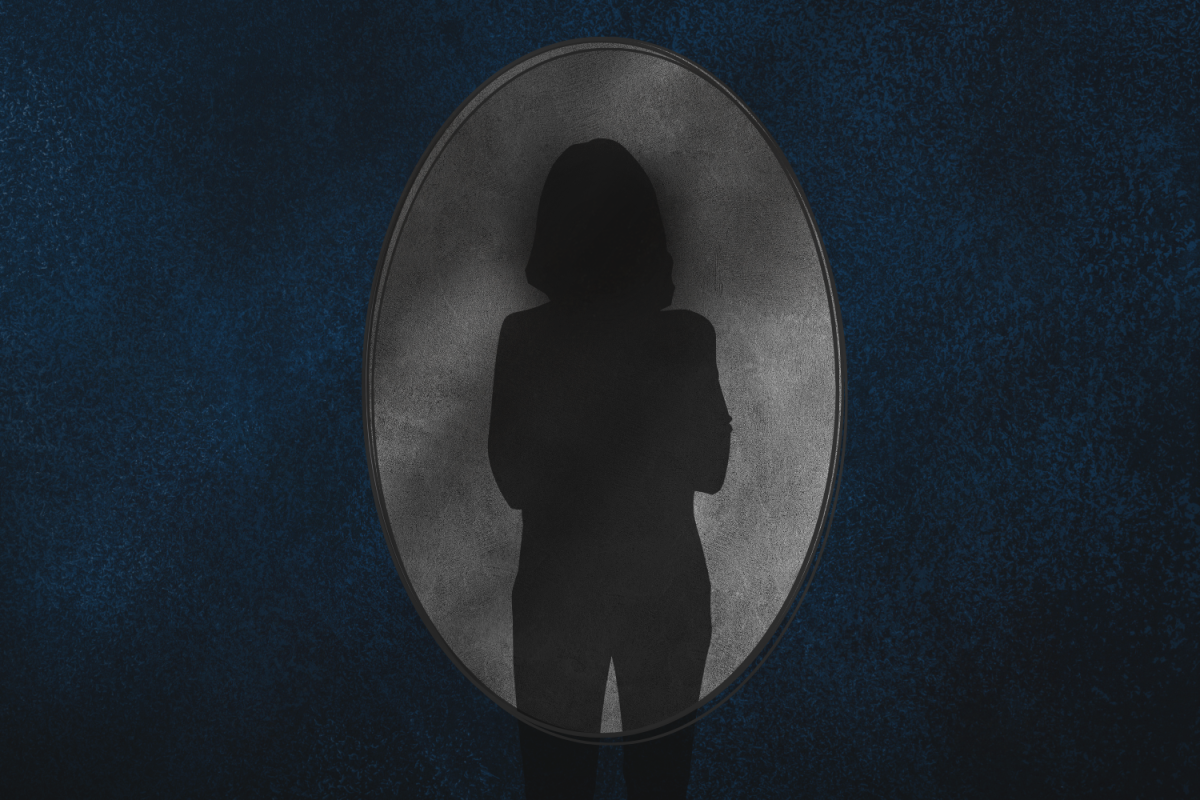
As you awake on a dark Monday morning, only one thought runs through your head: why? You roll out of bed, slowly walking to the bathroom, only to check how thin you look within seconds of reaching the mirror. Your skin seems to itch, begging you to start picking at every imperfection. Your eyes look empty as you tell yourself you aren’t good enough, and you can’t bear to see your reflection any longer.
You complete your usual routine and leave your house around 7:45, looking at your dad as he drives you to school, with a hopeless feeling in your heart and a weight on your chest. He doesn’t know how you feel. No one does.
“I wish I didn’t have to go to school,” you say, but he can’t see past the worthless words.
Walking down the hallways in such a familiar setting, you smile at everyone you pass by, praying they might see through the mask you wear. While some ignore you, others take notice, but never the part you wish they could see. You overanalyze every glance you receive, wondering what they would think if you disappeared. Would they even notice?
As the day goes on, you continue to smile, only digging the hole deeper into your heart and mind with every passing second. Lunchtime comes around, and it feels like no one wants you there. No one sees you alone, no one sees behind the mask. Everyone else is blinded by their friends who have stuck with them through it all, the same ones who left you when you needed them most.
You go home after what felt like an eternity, only to put on a grander show. “It was fine,” you tell your parents as they ask how your day went. But the second you reach the rooms where they can’t see, you snap. Every emotion floods your brain, your body. Your eyes fill with tears. You’re motionless. On your bathroom floor, you desperately want a way out. Something to fill the void. Something to fix your mind.
Hours go by, and every mistake you’ve ever made comes flooding back to remind you of just how messed up you are. You’re worth nothing. No one could ever love you, better yet, care if you’re even here. No one cares, right? Not one person checks up on you, not one asks you how you’re doing. All your friends are gone, and none of your family sees the pain behind your tired eyes. You want nothing more than to ask for help, but you never do. Someone who needs help is weak.
It gets worse. Day by day. Hour by hour. Minute by minute. Your brain is slowly shutting down, and you can’t hear anything positive anymore. Nothing anyone says to you truly matters—all that does is that you get what you want. The only thing you can think of is the razor you’ve used time and time again; all you want is to feel something. To know that you’re there, living and breathing. Your heart rate skyrockets. The thoughts won’t stop. One minute goes by, and the world falls silent as it waits for you to cave into the thoughts you’re drowning in. The night goes still. Yet something inside of you stops your actions, and you wake up the next day, just to relive the same nightmare all over again, still waiting for someone to notice the minuscule glimmer of hope on the surface of the water you’re drowning in.
To many, situations like this are just something they hear about at school, a warning of how hard someone can hit rock bottom. But this isn’t just a worst-case scenario—it’s people’s everyday life. For a long time, it was my life.
Where schools actively preach about mental health advocacy, the topic is slightly more complicated than one may think. Take a walk around any school, and you’ll find posters all over the walls, plastered with platitudes. “You matter.” “You belong here.” Yet many students never truly feel this way. According to a study done by the CDC in 2023, 40% of high school students experienced persistent feelings of sadness, and 20% reported that they had seriously considered suicide. In fact, many dread the idea of setting foot into the walls of a school where they feel almost as if they’re worth nothing to those around them.
It doesn’t help that people’s real mental health struggles and trauma are often frowned upon and thrown around as a joke. Listen to kids in any classroom. Often, you’ll hear, “I’m going to kill myself,” being said at something as trivial as having homework. Additionally, most parents can’t accept the idea that their children truly might not be okay, and classmates often resort to name-calling anything ‘wrong’ with you. According to the National Alliance on Mental Illness (NAMI), one in six U.S. youth aged 6-17 experiences a mental health disorder each year, and half of all mental health conditions begin by age 14.
What may seem like a joke to some is quite real for others, and it’s more common than most think. Suicide is the second leading cause of death for teens and young adults aged 10 to 34. Data from the 2023 Youth Risk Behavior Surveillance System indicates that 9.5% of high school students in the U.S. have previously attempted to take their lives.
Nearly all U.S. public schools provide mental health resources; however, less than half meet the standard for these to be effective, due to recent budget cuts and defunding of certain departments. Many students refrain from partaking in these programs due to the stigma placed around them and the fear of their peers’ opinions. According to a national study conducted by Springtide Research Institute, one-third of students who considered visiting a counselor or therapist in school about outside issues refrained from following through due to the fear of not being taken seriously or the fear that they might be judged. Students often despise the idea of being pulled from class and having to deal with the constant struggle of classmates asking why they continue to leave. Both women and men struggle with these thoughts; however, men’s emotions usually get suppressed more frequently. According to the CDC, roughly 80% of suicides are carried out by men. Emotions & mental illness for both genders are often seen as weaknesses; however, this becomes amplified for men. Many are afraid to speak out due to the consistent fear of being shamed for feeling something deeper. One male Davie High student, who wishes to remain anonymous, has felt this same uncertainty when speaking about his own struggles with his mental health.
“Men have always been given the stigma that they need to hold the weight of the world on their shoulders without asking for help,” he says. “Asking for help makes them feel weak and powerless.”
Regardless of your gender, your age, your race, or your differences, it’s important for you to remember that you are loved and needed here. Mental illness does not make you worth any less—you matter just as much as anyone else. The stigma surrounding mental illness needs to end, and communities need to begin to accept those who are different. Whether your battle is being fought out loud or in the unseen actions of a raging mind, it matters to the people around you. Every person deserves to feel seen, heard, and loved by those around them. Asking for help is not a weakness, but is a step towards healing.
Your battle does not have to be fought alone. One conversation can change the entire way you think, so never be afraid to reach out to someone. Below is a list of trusted resources for those struggling with this topic:
Call 988 for immediate help