





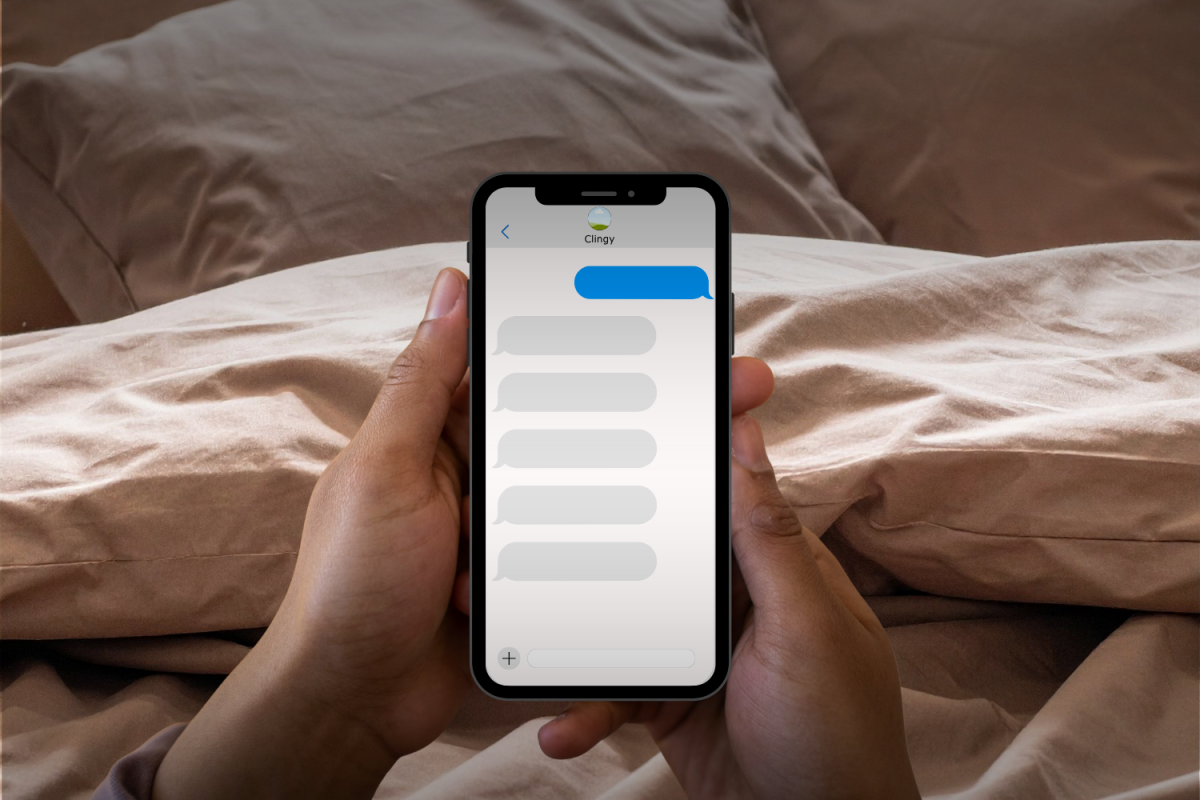














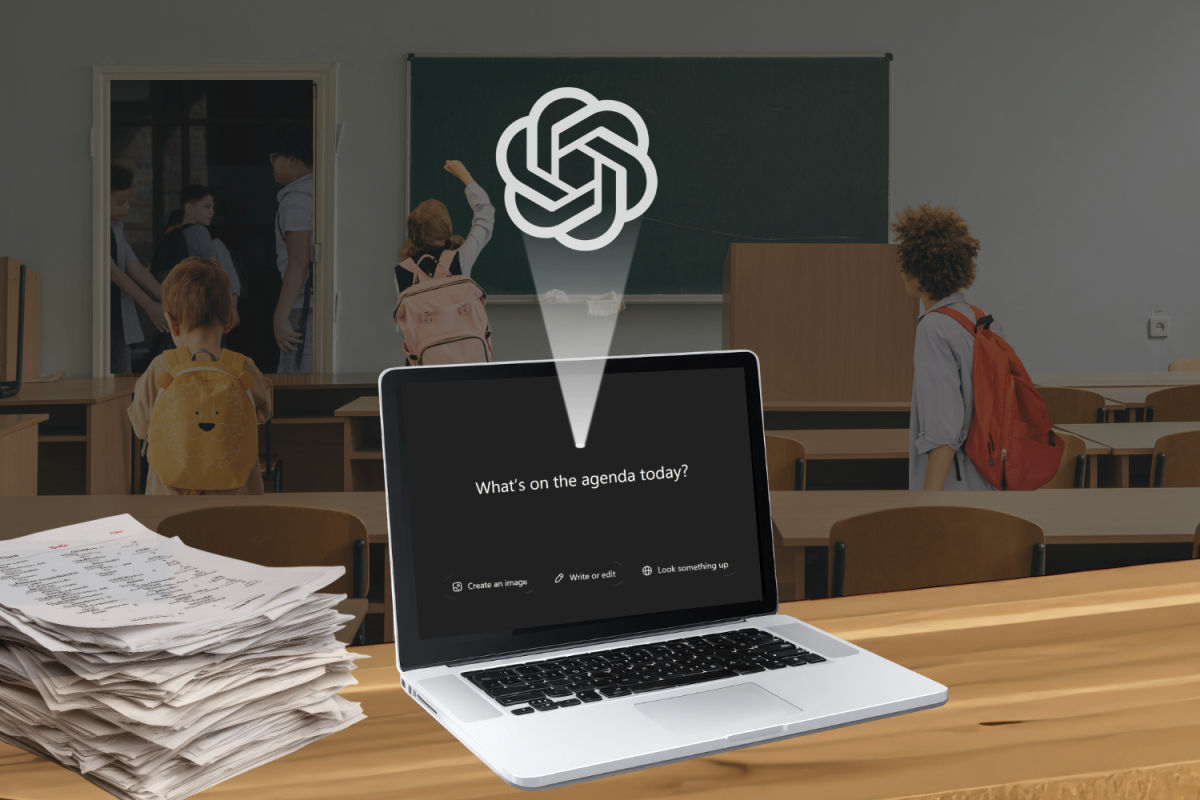
Is there anything else I can help with? ChatGPT prompts after the assignment is finished. Relieved, you copy and paste the finished product into Canvas right before class starts, just in time. As the last few students trickle into the classroom, you watch the look on their faces as they prepare to take the quiz that’s worth 10% of their grade — the quiz that ChatGPT just created.
Over the past couple of years, various studies, articles, and essays have explored the effect that the widespread availability of generative AI tools, like ChatGPT or Google Gemini, has had on students—and the conclusion is overwhelmingly negative. Articles detailing how students are cheating their way through college have blown up online, bringing awareness of the dangers of students outsourcing their critical thinking and writing skills to an AI model. However, many seem to forget that students aren’t the only ones in the classroom; teachers have the ability to use AI too. This effect hasn’t been explored to the same depth, and students are often left out of the conversation. What happens when teachers use AI and students don’t have a say?
Why Teachers are Turning to AI
To understand the effect of teachers using AI, it’s important first to understand why a teacher might choose to use it in their classroom at all. For some, like English teacher Tani Caudle, the use of AI is mostly supplementary, helping automate simple tasks.
“When I have used [AI], it has been to ‘beautify’ a slide, proofread an email for tone, or make templates for documents,” Caudle says. “Sometimes I have used it to help populate extra practice for students who needed or asked for it — vocab practice, new grammar sentences, etc.”
Dr. Karla Miner, STEAM Instructional Coordinator for Davie High School, says she uses AI in a similar manner.
“A lot of my usage is based on treating it as an assistant,” Miner says. “I prompt it with content/research/work and then ask clarifying questions and get it to pull out themes. If the themes are in line I then prompt it to ask/design questions/prompts/problems (and sometimes even ask it to help me make something AI proof). I have yet to directly ‘copy and paste’ something produced, though (I always end up tweaking).”
While these teachers do not use AI to directly create material or content for their classes, a report from the Center for Democracy and Technology found that 69% of teachers use AI to develop lesson plans, update curricula, or create quizzes, lessons, and other assignments. A Davie High junior who wishes to remain anonymous says she thinks teachers are most likely to use AI in this way for time-saving purposes.
“I’d say there are obviously some time-saving aspects there,” she says. “We know that teachers are really busy. They have a lot on their plate, especially if they have things to do outside of the classroom, but still in the school. So there’s the element of helping them relieve some of their load for some more tasks that might be able to easily be automated.”
However, AI becomes a problem in the classroom when teachers take what AI generates for them and then use it blindly — especially without disclosing this information to students. The junior says that she has had frustrations with her teachers using lesson materials directly sourced from AI.
“There’s never a 100% foolproof way to tell when something’s AI, but there are definitely patterns,” she says. “The most obvious indicator was that the information was mainly incorrect. We would learn one thing in class, and then she’d be out the next day. And so our sub work would be an AI-generated reading passage and questions, and this information was never explicitly disclosed to us.”
The Classroom Double Standard
AI is certainly in the classroom—the same report from the CDT shows that 85% of teachers used AI in some way during the 24-25 school year—but the conversation around ethics has been too often undiscussed on the teacher’s side. Davie County Schools implemented a new AI policy in the student handbook for the 25-26 school year, but the policy only gives guidelines on student work. For students, assignments created or altered by AI may be considered cheating. However, there are currently no policies or guidelines in place for how teachers can use AI, and no instructions for how, or if, this information should be disclosed to students.
This double standard in AI use has been frustrating for some students. The junior says that the lack of guidelines leaves her without a framework to determine whether her teacher’s use of AI is permitted or ethical, while expectations for student use remain very clear.
“I think that expectations are not explicit for teacher use of AI,” she says. “I would say most students have no idea what’s expected… There wasn’t a policy that we could look at.”
As the junior notes, when an assignment or other piece of content is entirely AI-generated, it can often contain incorrect information or inconsistencies. With the current AI models available, there is no way to avoid this problem when creating lesson materials without also reading over and altering the AI’s response. However, the burden of fact-checking information presented as correct should never fall on students. To expect students to bear the weight of this responsibility is to disservice them and erode their trust in the educators that they need as role models now more than ever.
Where Should the Line Be?
In some cases, the use of AI by teachers to automate or handle simple yet time-consuming tasks likely does not need to be disclosed to students. While she has had her frustrations with teachers’ use of AI, the junior also acknowledged that there are instances where teachers can use AI effectively. She recalled that one of her teachers used AI to make a course syllabus based on all the assignments due that semester
“[The teacher] always checks over it, always makes any needed changes, and that’s a point where I don’t think that it needs to be disclosed,” she says. “You’re taking the extra step, you’re feeding it that information directly, and you’re checking it and all the things, and it doesn’t directly impact our learning outcomes.”
For tasks like these, disclosing AI use is unnecessary. However, students certainly deserve the right to know when AI is being used by their teachers in ways that impact their grade, and this would require Davie County Schools to develop an AI policy to guide teacher use. And perhaps most importantly, students must be included in this conversation.
In a time when students have grown increasingly disconnected from their educators and the education system in general after the COVID-19 pandemic, it’s essential for school decision makers to consider student perspectives in an area that directly impacts them and is deeply connected with their opinions. Students need educators and class content they can trust in order to succeed—and that can happen when students have a voice in this conversation.