
















Sophie Clements, a freshman at Davie High School, entered Walmart with one goal in mind: finding a Needoh for her 8-year-old sister’s birthday. When Clements saw a collection of more than a dozen Needohs on display, excitement and relief fell over her. As she walked toward the shelf, a group of teenagers entered the aisle just ahead of her and snatched all the Needohs, leaving her empty-handed.
“Just a few days ago, a store had restocked them, and I’ve just seen, like, a group of girls buying all of them, like the entire crate of them,” Clements said. “And it was like, ‘What are you doing?’”
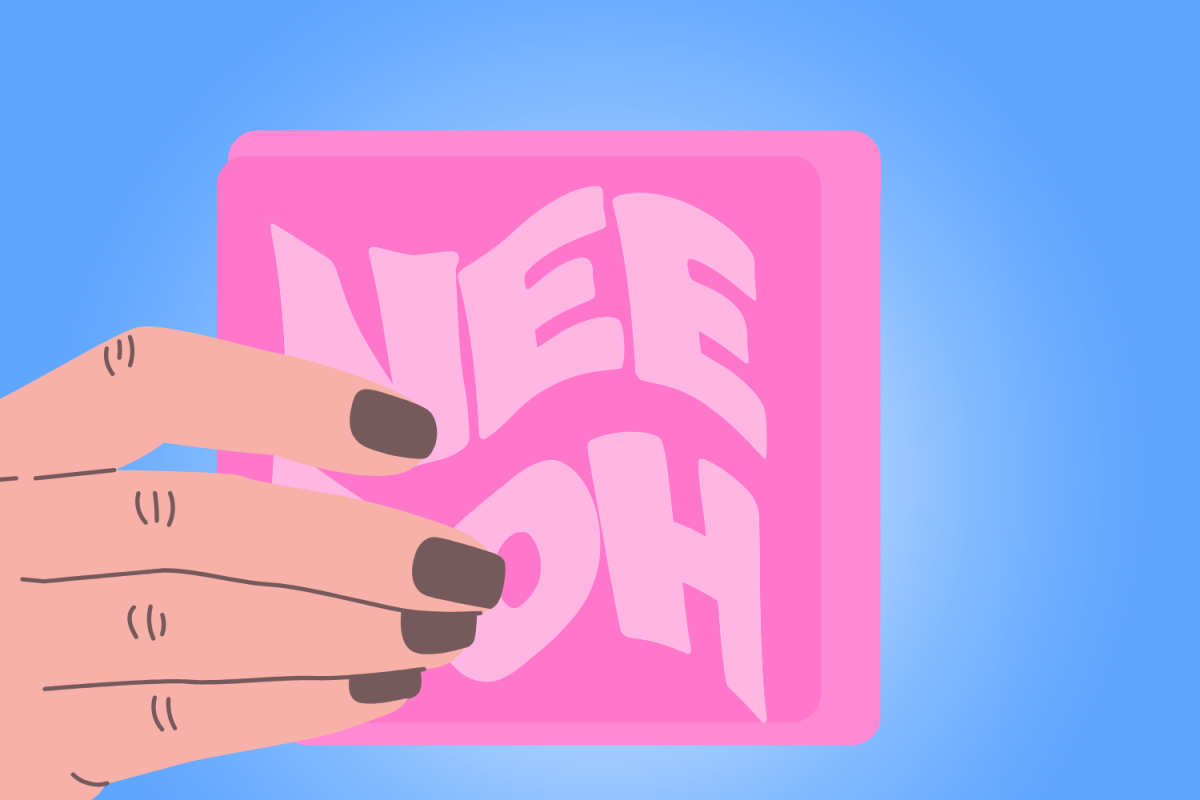
Across the country, scenes like this have become increasingly common. The Needoh, a series of stress ball toys debuting in 2017, has suddenly surged in popularity, turning a simple sensory squishy into a must-have item—one that has become increasingly difficult to find.
This surge has caused stores like Walmart and Target to constantly be out of stock of the popular stress toy. Davie High is no stranger to this fad—classrooms and hallways are filled with Needohs. Social media has played an important role in this surge and was the main reason sophomore Ben Sheek began seeking them out.
“Everybody I know has one or everybody that I know wants them or to go get them,” Sheek said. “I’ve seen them all over TikTok and on my For You page, and they just seem really fun.”
For Sheek, the popular squishy is “both a stress reliever and a toy.” And he is not alone. According to a November 2020 study, the use of stress balls can decrease cortisol (a stress hormone) levels significantly, which is what appealed most to Clements.
“It’s like a stimulation kind of thing,” Clements said, “and it gives my mind something to get distracted from when my anxiety rises.”
The appeal of Needohs isn’t limited to just students. Kamryn Akers is one of multiple Davie High teachers who has her own collection of the popular squish toy.
“I always have to have something in my hand to fidget with, most of the time,” Akers said. “It’s like my keys, or if I’m drinking something, like just my cup. So I feel like it helps me, like, not talk with my hands as much as I do a lot of the time.”
While Akers sees a number of benefits to having Needohs in the classroom, she knows some of her colleagues find them to be a distraction. Though she has not experienced these issues herself, other teachers have observed students throwing their squishies across classrooms or making trades during class time.
And outside the classroom, other downsides have become harder to ignore. Needoh trading is an outgrowth of the larger trend of Needoh hunting, leading fans across the country to scour store shelves for the newest variations. Having a collection of Needohs can be costly, ranging from $5 to $20. Their scarcity in stores has led a number of customers online to fill out their collections, though some are now spending more money than they typically would for a single Needoh just to keep up.
“I’ve probably spent like over $100 total for my Needohs,” Sheek said.
“Hauls” are a popular trend across TikTok to showcase what people buy; many “Needoh hauls” range from 5 to 15 Needohs in a single trip. For students like Senior Ada Wallace, this pattern of overconsumption is concerning.
“I just think like, there’s so much. It’s like an ethics thing, and it’s also like, ‘Why do we need this much stuff?’” Wallace said. “A lot of people are having, like, 12, 13, 14, 15, Needohs. And it’s like, that’s a lot of plastic.”
Another issue surrounding the Needoh trend is who gets left without them. Many neurodivergent people use fidgets to self-regulate, stay focused, and calm anxiety. However, they can no longer find these items in stores because people are buying so many to keep up with the trend.
“People with autism, ADHD, they need stuff like this,” Wallace said, “and it’s gone from the stores, and so they don’t have access to it.”
For Clements, that shortage is the hardest part.
“Some of mine have popped before because of how old they are,” she said. “So when it’s hard to find new ones… It’s kind of frustrating that I don’t have that alternative to my anxiety.”
As with many viral trends, some students question how long this popularity will last. Trends like these are accompanied by people pushing the limits of the product, and once those limits are reached, the next big thing is introduced. Micro-trends tend to die out in a matter of months. Many people, like Wallace, believe the same will happen with Needohs.
“I think, max, like two months they’re going to be here, and then people are just going to start throwing away, and there’s going to be something new,” Wallace said. “I kind of compare it to, like, fidget spinners, like, when, like, I was in elementary school, they were, like, really hyped up for a couple months, and then I didn’t see them again.”
Whether the Needohs will follow the same trajectory as those previous trends or stick around a little while longer, the fad has already made an impact. But as store shelves empty and TikTok feeds flood with images of the next big thing, one question remains: Can a simple stress reliever ever be worth this much anxiety?
Lila Moore and Grace Carroll contributed to this article