The Future is In the Classroom: North Carolina Educators Rally for “Kids Over Corporations”


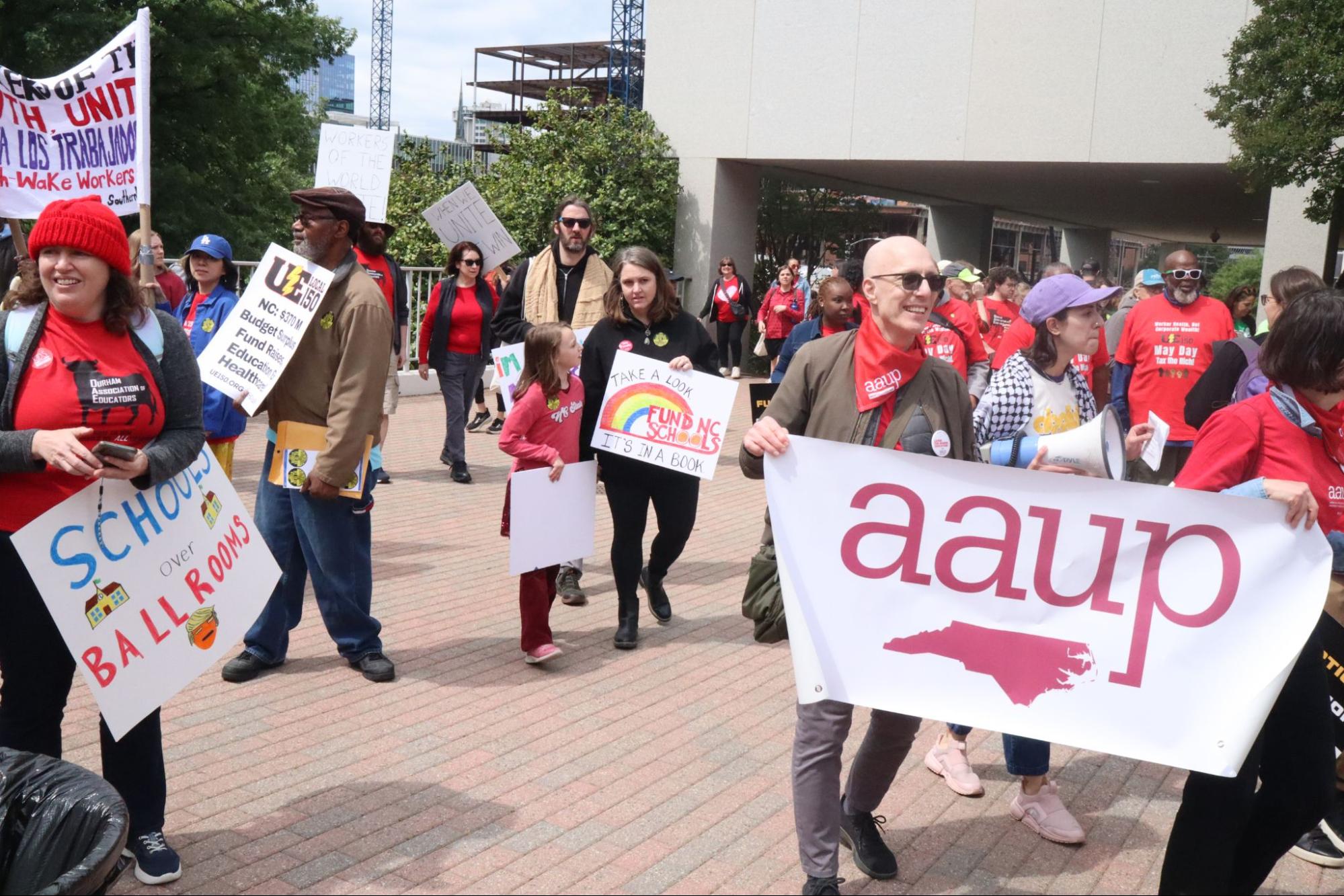
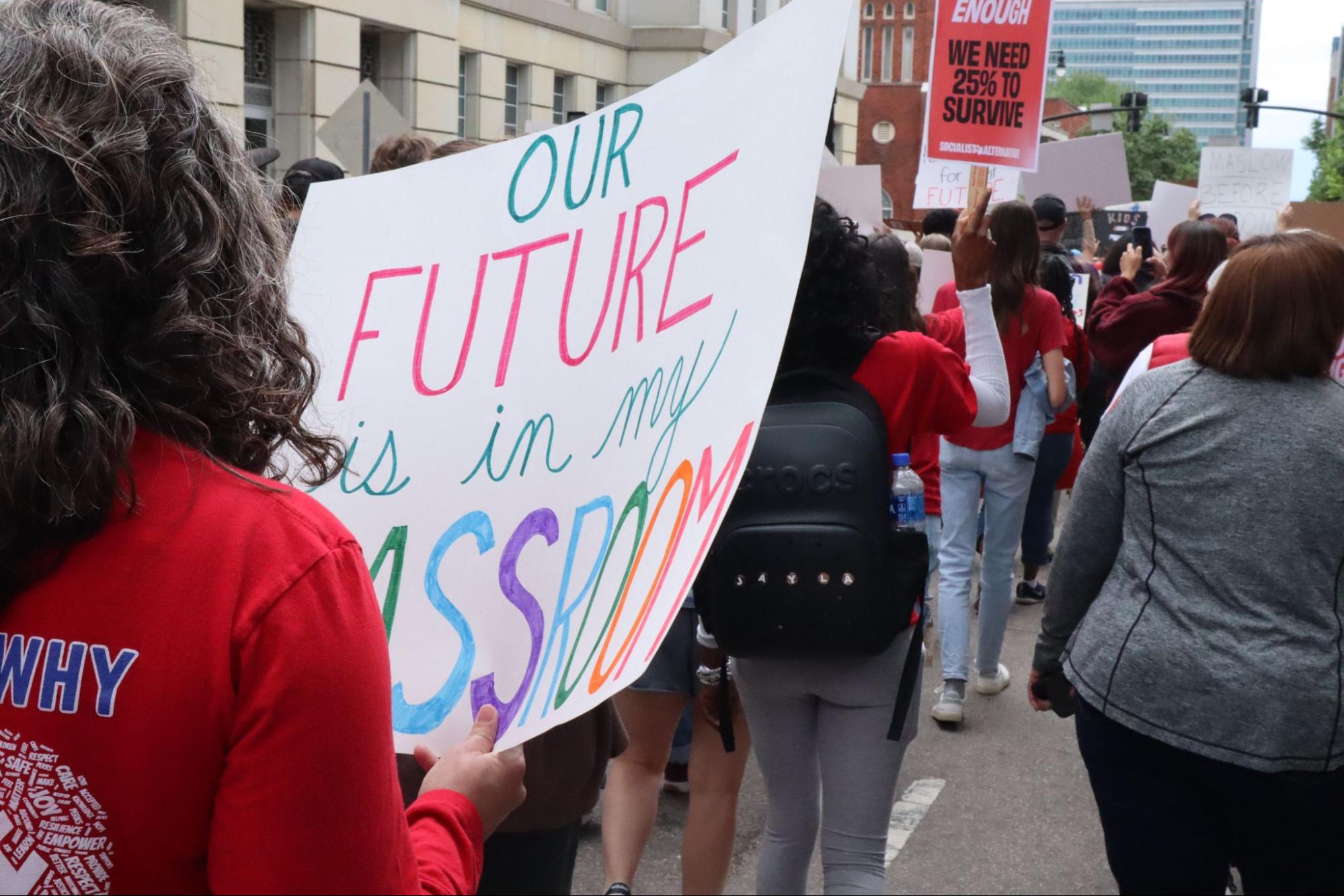
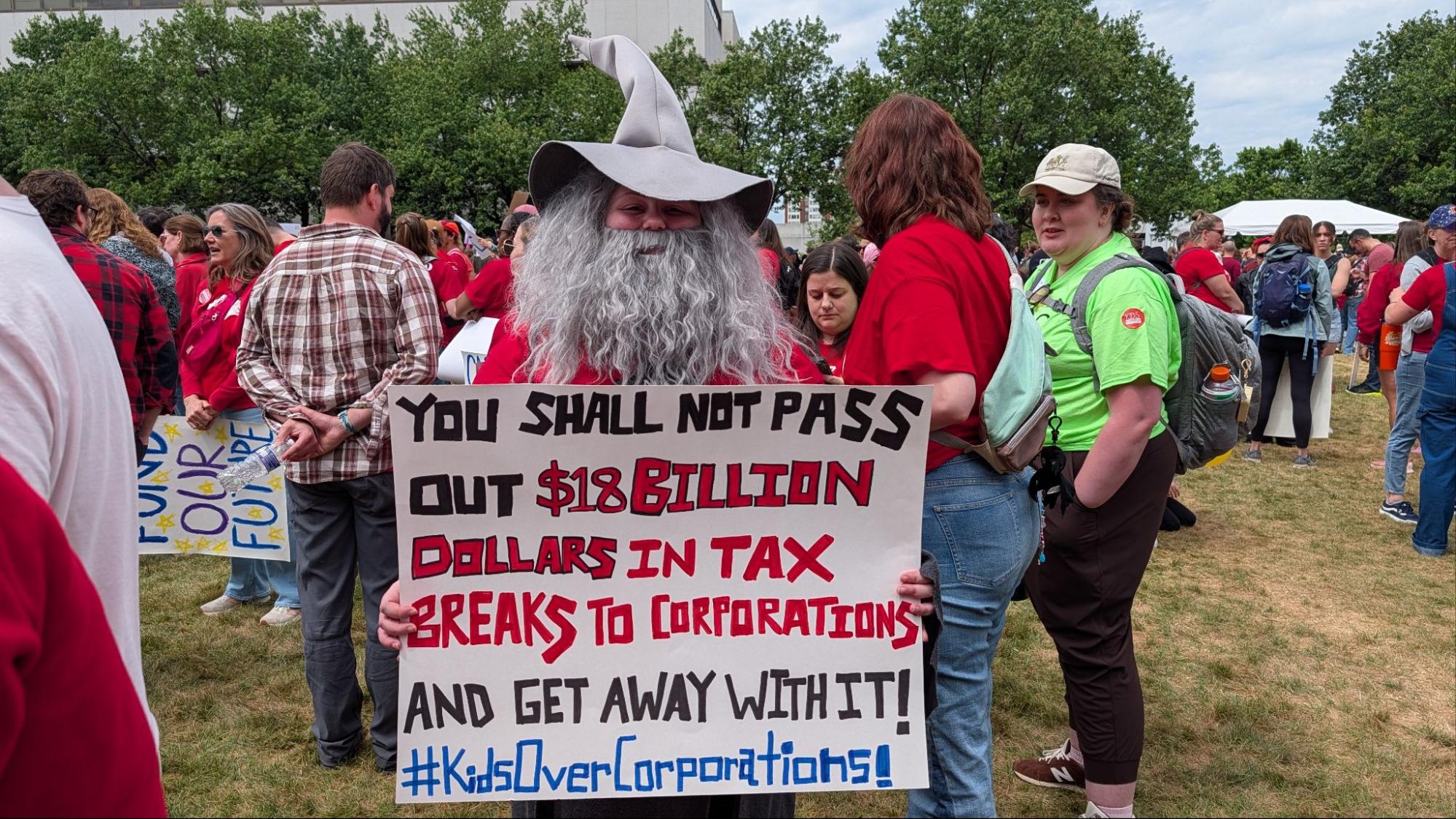
The streets of Raleigh were painted red on Friday, May 1, as nearly ten thousand protesters marched outside North Carolina’s General Assembly in a powerful show of unity to support public education across the state. Handmade signs rose above the crowd, and matching shirts turned the capital grounds into a swirling wave of color. The crowd represented a broad range of North Carolinians—public school teachers and staff, elementary to college students, parents, grandparents, educational advocates, and other residents—all united by a shared commitment to investing in the classroom.
The defining message of the movement? Kids Over Corporations—an idea that has become a rallying cry for those fighting for the future of public education.
Among those attending the demonstration, hosted by the North Carolina Association of Educators (NCAE), were several of Davie County High School’s own teachers who gathered in response to growing concerns over the direction of North Carolina’s public school system.
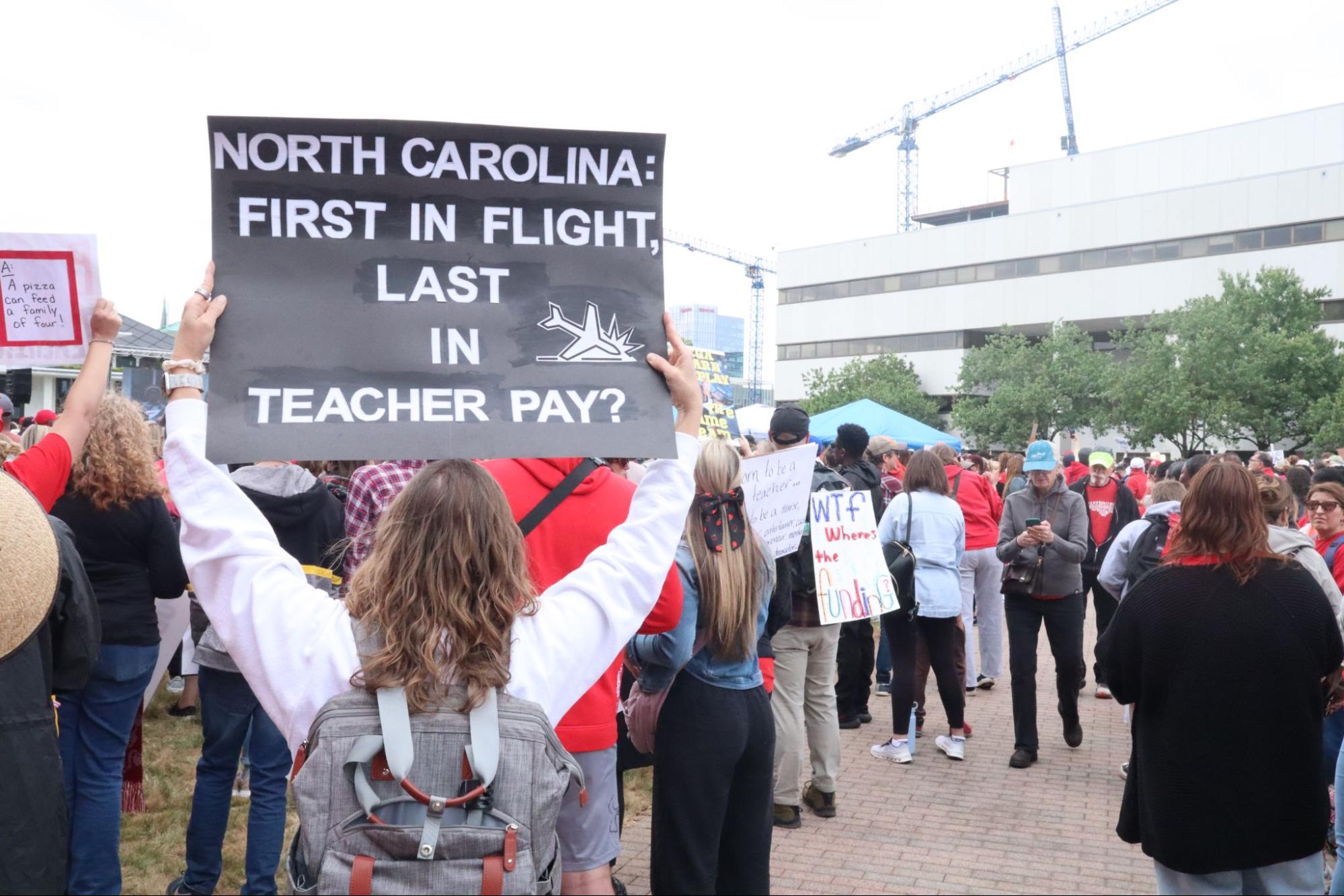
A primary motivator behind the Kids Over Corporations rally, according to NCAE, was North Carolina’s systemic underfunding of public education. In December 2025, the Education Law Center released its annual Making the Grade report, which provides an evaluation of state school funding based on data from 2022-2023. The report, which included all 50 US states plus Washington D.C., ranked North Carolina 50th in per-pupil spending and 51st in funding effort, a measure of how much a state invests in K-12 education relative to its Gross Domestic Product.
In addition to ongoing funding concerns, the state’s budget—or lack thereof—has added further uncertainty. Though the General Assembly was set to approve a budget on July 1, 2025, disagreements between lawmakers prevented the legislature from reaching a successful resolution. As a result, North Carolina continued to operate under past budget provisions, leaving public school employees without their expected cost-of-living salary increases and halting potential increases in school funding.
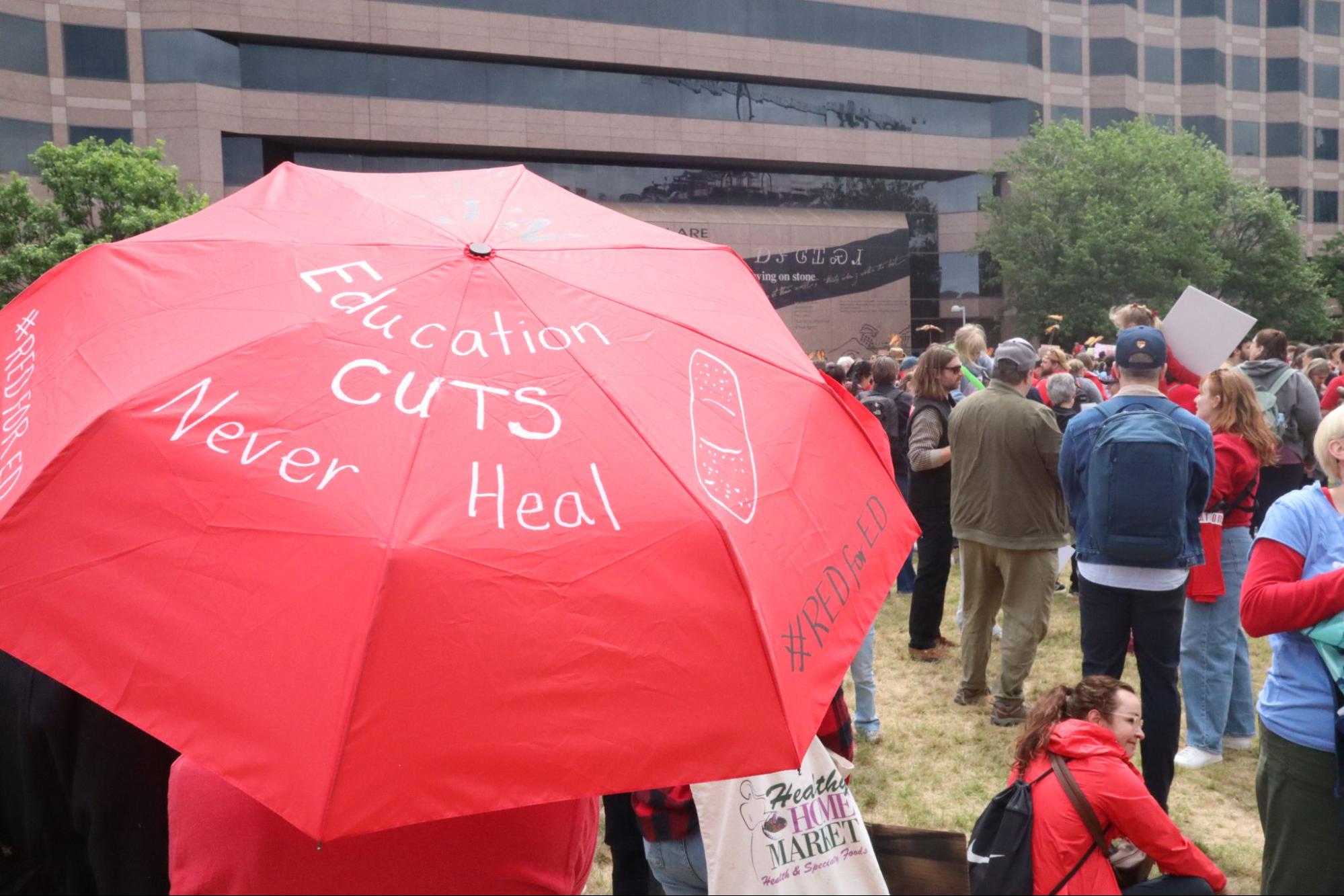
According to the NCAE, these issues reflect a broader pattern of state policy prioritizing private interests over public education. Instead of investing in public schools, the group argues, lawmakers have increasingly supported private school programs and corporate tax reductions.
One major point of controversy is the growth of private school vouchers through the Opportunity Scholarship program. The NC General Assembly’s decision to allocate taxpayer funds to private school vouchers has sparked controversy among educators, students, and citizens, who often argue that vouchers divert money from public schools.
The rally also highlighted concerns over North Carolina’s declining corporate income tax rate. Although the state already has one of the nation’s lowest flat corporate tax rates, policymakers have moved to gradually eliminate the tax entirely. By 2029, it’ll fall to 0%. Because state education funding depends heavily on tax revenue, critics fear that the cuts will decrease the amount of funding available for public schools.
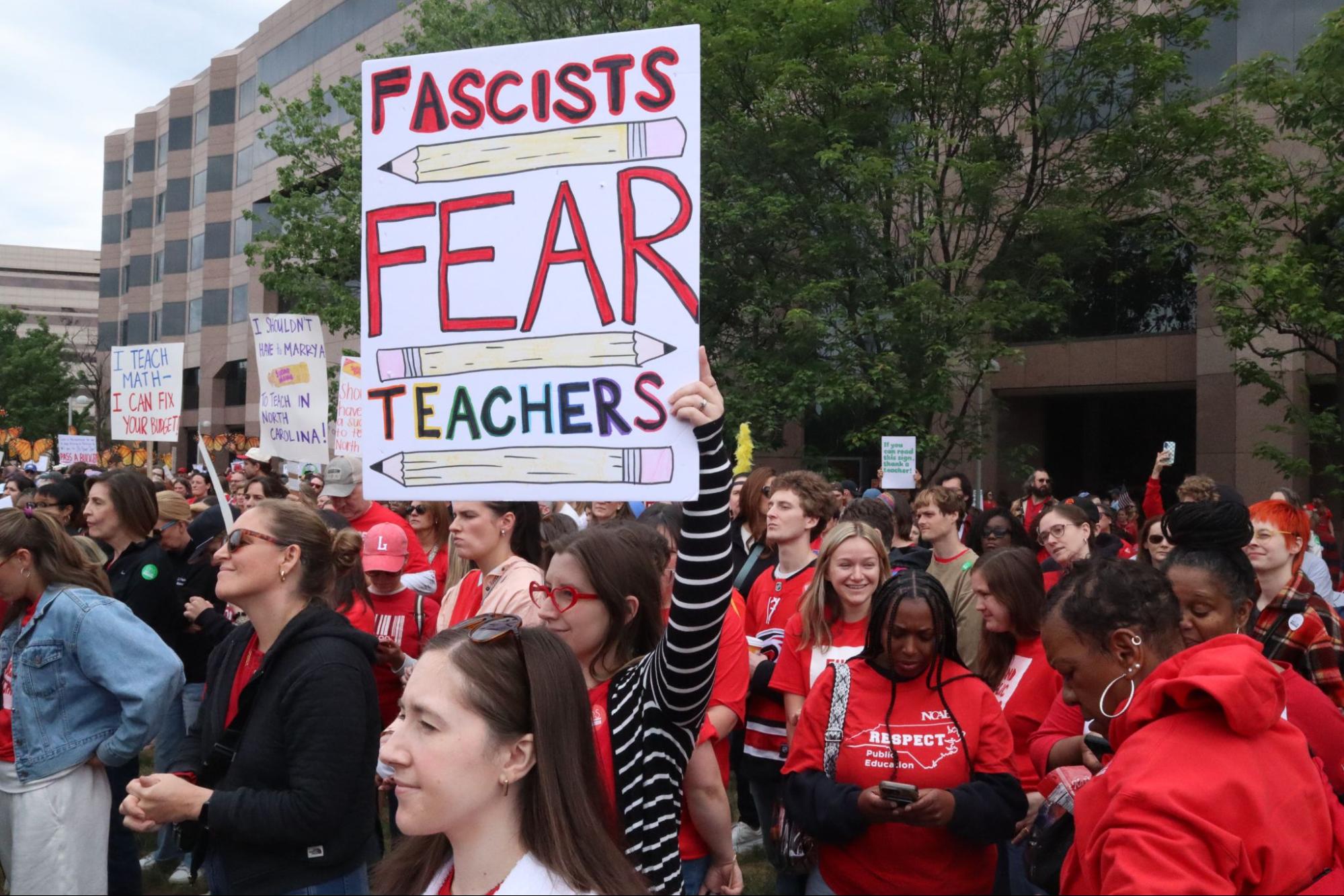
Along with the emphasis Davie High’s educators placed on resource access, the march itself focused on another component of education funding: teacher pay. Although the NCAE framed the demonstration around the slogan “Kids Over Corporations,” many messages from the rally also focused on raises and salaries for public school employees. For some teachers in attendance, this emphasis risked overshadowing the rally’s broader message about educational inequality.
“Some of it was teacher pay,” Pond said. “Some of it I didn’t fully agree with, because it wound up drawing more attention to the corporations… I feel like a lot of it was between teacher pay and the funding of education, but they didn’t focus on it, in my opinion, the right way.”
The anonymous teacher similarly noted that while teacher pay was an important issue, it was not the sole reason most attendees supported the rally.
“I think sometimes the message can get a little lost because of public opinion,” they said, referencing controversy surrounding the march’s apparent focus on salary. “But it really is about the kids and about funding for schools, and I feel like if money has already been allocated for public schools, it certainly shouldn’t be given elsewhere.”
Supporters also argued that discussions surrounding teacher pay are directly tied to the quality of education students receive, with low salaries and limited wage increases contributing heavily to teacher turnover and instability in schools. This challenge is not unique to North Carolina. According to the Center for American Progress, 44% of teachers leave the profession within the first five years. This issue is magnified in rural districts like Davie County, where lower pay rates and limited opportunities often lead teachers to seek employment in more urban or well-resourced areas.
Gerald noted that one of her greatest concerns is the normalization of teaching as a temporary profession instead of a long-term career.
“I feel like teaching is becoming something like an internship job,” she said. “Eventually, it’s going to become like you teach for three years and then you leave, that’s how long people are here. And I really wish that politicians would see that we need teachers that are here ten, twenty, twenty-five years.”
The anonymous teacher, who has spent over ten years in the classroom, expressed similar concerns, particularly about the lack of salary growth for experienced teachers. Under North Carolina’s current pay scale, veteran teachers from years fifteen to twenty-five receive no pay increases.
“Unfortunately, teaching is going to become a transient job, because I don’t know many people who would stay in the same job for ten plus years and not get a pay raise,” the teacher said. “While the beginning teacher pay has steadily increased since I became a teacher, veteran teacher pay has not. That is definitely a big concern, because people can’t pay their bills.”
The teacher added, “No one gets a college education thinking that they’ll be in a position where they’ll be living paycheck to paycheck or not be able to make ends meet, or not be able to afford to have children themselves because being a teacher doesn’t pay enough for you to have your own children and support them in the way you’d want to.”
The scale of the rally drew significant statewide attention. At least 22 of North Carolina’s 115 school districts closed on May 1, most citing concerns about their inability to properly staff schools due to the volume of teachers requesting leave. The majority of the 22 districts that closed were urban areas, such as the Charlotte-Mecklenburg region, Winston-Salem, and Durham.
NCAE publicly supported school closures, a stance that was viewed positively by Facebook users, though reception was largely split down the political aisle. Many Democratic elected officials expressed support or understanding for the protest, while Republican politicians criticized participating educators. The NC branch of the Republican Party shared an article on X asserting that the rally “abandon[ed] thousands of students” in districts throughout the state. Phil Berger (R), the Majority Leader in the North Carolina Senate, echoed this sentiment on the Senate floor.
“My concern is for the parents who have to make special arrangements for their children, Berger said, “because the teachers refuse to work on a day that they’re supposed to work.”
In his remarks, Berger also dismissed claims that the General Assembly neglected teacher pay and education funding.
“We need to work on paying teachers more and funding education at a higher level. If you look at the last 15 years, that’s what you’ve seen year after year, that we have done that,” Berger said. “That’s a priority of this General Assembly, as it has been for the past decade.”
On the other hand, Maurice “Mo” Green, the Democratic North Carolina Superintendent of Public Instruction, expressed his gratitude to demonstrating educators. While acknowledging that teachers are needed inside the classroom, he also emphasized educators’ right to advocate for themselves.
“Those educators also deserve to be paid appropriately for their incredible work that is leading to historic academic achievements for our state,” Green said. “When they are not receiving adequate compensation, it is important that their voices be heard.”
Local reception of the May Day rally leaned positive. While multiple Davie faculty members attended the rally, Davie County Schools was one of 93 North Carolina school districts to refrain from closing on May 1. Dr. Heath Belcher, superintendent of Davie County Schools, shared an email with faculty expressing his administration’s commitment to educational funding and his gratitude to teachers.
Belcher signed a resolution supporting the funding of the Exceptional Children (EC) programs in Davie County Schools. The resolution urged the General Assembly to allocate greater funding to the EC programs in Davie County. He also signed a resolution urging the General Assembly to pass a 2026 Appropriations Act that increases teacher pay and allocates more funds to schools throughout the state.
Your donation will support the student journalists of Davie High School. Your contribution will allow us to purchase equipment and cover our annual website hosting costs.