



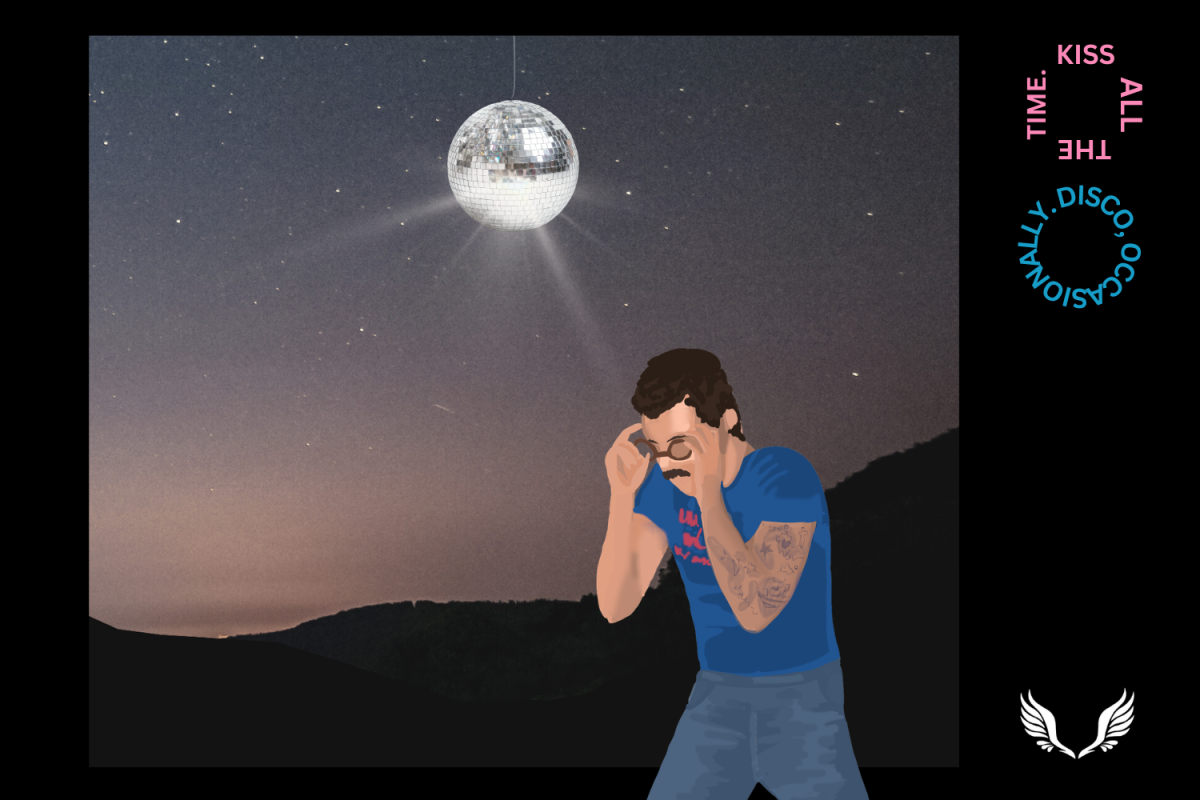










Harry Styles has always been a musician to subvert expectations. From the beginnings of his solo career after One Direction, Styles has never quite delivered the music that was expected of him, rather creating the music he wanted to and that felt right. “Kiss All The Time. Disco, Occasionally,” Styles’s fourth studio album, continues his pattern of doing just that and marks the return of the singer to the music scene after a 3-year hiatus. The name of the album accurately encapsulates what “KATTDO” is about. It takes listeners through a dance- and electronic-infused journey dripping with a sense of freedom and love that Styles discovered during his time out of the spotlight.
“Aperture,” the opening track, was released ahead of “KATTDO,” surprising fans with a dance and house music-inspired track that deviates from the more pop-infused songs and slower, lyrical ballads that have marked Styles’s solo career. The song really sets the tone for the rest of the album — Styles boldly proclaims the lyrics “We belong together / It finally appears it’s only love” and “It’s best you know / What you don’t / Aperture lets the light in” on repeat throughout the chorus, introducing the motifs of freedom, love, and introspection that Styles continues to develop throughout the rest of the album. Production-wise, “Aperture” features an electronic pulse throughout and backing vocals by House Gospel Choir, who are featured in a total of four tracks on “KATTDO” — a major change from the production choices that have shaped his past albums, marking a shift away from the stricter confines of pop music.
While some of the more energetic songs contain lyrics focused on introspection, Styles takes a softer approach to introspection with “Taste Back” and “American Girls.” The lyrics “Did you get your taste back? / Or do you just need a little love?” are set over dreamy synths and sound almost like a conversation between Styles and someone he was once in a relationship with while they both rediscover themselves — yet the process is filled with genuine hope and a sense of freedom. In “American Girls,” Styles sings about his friends falling in love with American girls, eventually settling down and getting married, something Styles has remarked in an interview with Zane Lowe has changed his perspective on marriage during his hiatus. “American Girls” is but one song of many he included on the album that reflected his growth during his time away, like his finding the desire to eventually settle down with somebody like his friends have.
“Pop” and “Dance No More” are the tracks that feel most familiar to fans (the title “Pop” itself is a callback to lyrics in “Cinema,” featured on “Harry’s House”), based on his previous work and how he promoted his new disco-inspired album. “Dance No More” perfectly embodies the “Disco, Occasionally” part of the album’s title with its funky 80s feel, inspired by a night Styles spent on a dance floor in Berlin.
“Coming Up Roses” and “Paint By Numbers” are almost jarringly different than the rest of the album’s tracks, yet both fit perfectly into Styles’s narrative of growth and coming out a freer, more loving person. Where other tracks were more focused on the feeling that came with listening, “Coming Up Roses” is Styles’s most lyric- and vocal-driven piece on “KATTDO,” featuring much less synth and more sweeping orchestral moments than any other track. However, the lyrics of this emotional centerpiece still center on the vulnerability and honesty that have marked this chapter in Styles’s life.
“Carla’s Song,” which sounds almost like a dreamlike, euphoric trance, brings the album full circle. “Carla’s Song” sounds almost Aperture-esque with its fast-paced synths and freely proclaimed lyrics and is sure to transport the listener to an imagined dance floor. While Styles has said that the song is inspired by his friend Carla discovering new music, specifically Simon and Garfunkel’s “Bridge over Troubled Water,” it almost feels like Styles is talking to himself when he repeats the line “It’s all waiting there for you” throughout the verses and over the transcendental chorus to complete the album’s narrative of freedom and self-reflection.
While “KATTDO” has surprised both fans and critics alike since its release, it still feels like the natural musical progression of the singer-songwriter who, in his time away from the public eye, has spent the majority of his time traveling across Europe and even training for marathons. Styles has always been one to be unapologetically himself, leading some to even compare his persona to that of 70s glam rock star David Bowie. Much like how Bowie relocated to Berlin and released three career-redefining albums during his time in the city, Styles parallels this aspect of Bowie’s life — “KATTDO” was produced and recorded during Styles’s time in Berlin. “KATTDO” feels like the most free, romantic, and hopeful of Styles’s discography, inviting the listener to simply feel the music wash over them and join Styles on the dance floor. “KATTDO,” in all of its dance- and electronic-infused beats to its emotionally vulnerable lyrics, is one of the most authentic and free releases of Styles’s career.