SPOILER REVIEW: “Stranger Things 5” Had More Spectacle than Substance
THIS REVIEW CONTAINS SPOILERS FOR “STRANGER THINGS 5”
After a nearly four-year hiatus, the Duffer Brothers’ culture-defining “Stranger Things” has returned to Netflix’s homepage—and not without controversy. The popular sci-fi horror show has made its mark as a staple of modern American television, amassing a total of 1.2 billion views across all five seasons.
It’s no surprise that virtually everyone with a TV had high hopes for the final season of the show that defined the last decade, and that’s exactly what made it so disappointing. From the Duffers’ sudden-onset dialogue deficiency to weak set design and plot holes that have no place in a $480-million production, many fans are disheartened that one of the most influential television shows of the 21st century flopped so hard.
The Duffers’ inexcusable writing this season was a disservice to the talented cast of such a keystone series. It’s upsetting that the party of actors and actresses that we’ve grown to love over the past decade couldn’t bid a proper farewell to the show that, for stars like Millie Bobby Brown (Eleven) and Noah Schnapp (Will Byers), made their careers. But why exactly did the show fail on so many fronts?
The first minute of Season 5’s first episode killed all of the potential found in Season 4’s cliffhanger. The 18-month jump between the show’s final two seasons “killed the season before it even started,” because the destruction in Hawkins and the viscerally high stakes should’ve carried over.
A Variety article put it best: Season 5 found itself in a state of “arrested development.” The Duffers simmered the pot for Season 4, made the fans drool over the aroma for three years… and then dumped the whole stew down the sink.
The plot is no longer the never-ending story that Suzie and Dustin (Gaten Matarazzo) lauded in Season 4 (and by the way—where is Suzie, anyway?). Instead, it’s a never-ending fight that relies on miracles for punches. It appears as if the survival of any character in the show is the direct result of divine intervention.
It’s true—everyone with a soul was cheering for Karen Wheeler in “Escape from Camazotz” when she blew up those demodogs—but what if the injured mother of three was one minute late? What if she hadn’t woken up at all? There goes a fourth of our cast.
What if the demogorgons in “Sorcerer” weren’t attacking the party in what appeared to be complete synchronization? Now the rest of the cast is gone.
“Stranger Things 5” relies on a series of improbable events. Even when logic suggests a permanent consequence, the plot bends to protect the characters the Duffers seem to be far too attached to. If characters like Steve Harrington (Joe Keery) and Robin Buckley (Maya Hawke), of all people, hadn’t uncovered indiscernible notions about the Upside Down and given their monologues, the plot would’ve screeched to a halt by the second episode.
The most offensive narrative shortcoming of all is the directorial decision to leave Eleven’s death ambiguous. What had the world on edge, at least before the season was aired, was the idea that the characters they’d grown to love over the course of a decade were in genuine danger. Season 5 revealed that none of them ever were.
Any major character death—preferably more than one—would’ve done wonders for the season. The Duffers, as competent writers, were innately aware of this fact, but killing off a protagonist seemed too heavy a burden for them to carry. It’s as though they didn’t even find severe injury a plausible route. They ultimately concluded that they’d kill Eleven, but immediately afterwards revealed that she might not be dead. In the magnum opus of fan service, the Duffers gave the viewers of their horror show who didn’t want to think scary thoughts another option: Eleven might be gallivanting around in Iceland for whatever reason.
“Schrödinger’s Eleven” is frustrating, but we choose to believe Eleven is dead so we can pretend there’s some semblance of good writing in Season 5.

Lines like that reveal that the writers of “Stranger Things 5” have a serious misconception about the show they’re shaping. There’s a reason the first two seasons resonated with fans to the extent that they did: they blended small-town horror with nostalgia and humor to create something that any viewer could find themselves in. The final season reveals a stark departure from those local roots. Fans have been rightfully quick in pointing out that some of the Duffers’ cinematic decisions take a page out of the Marvel movie playbook, putting spectacle before substance and stripping away the show’s relatability.
But most frustrating of all? You can’t get through a single episode without cringing at least once. The most cringey denominator, at least in the script, is every character’s tendency to come across some incredible stretch of a revelation and use inanimate objects and semantic lectures to convey their epiphany to their peers.
Take Lucas Sinclair (Caleb McLaughlin) in “Shock Jock,” the fifth episode, for instance. He’s staring into the microwave while his popcorn is popping—and then it hits him. The character uses his bag of popcorn as a metaphor to convince the other members of the party that his plan for saving the world is viable—and somehow, it is. If that wasn’t expository enough, the Duffers littered his speech with flashback-style clips, just in case you forgot everything that happened in Season 3.
It’s not just Lucas—scenes like this with a few characteristic variations happen nearly every episode. As a result of this intense and implausible exposition, the plot itself miraculously pole vaults from point to point, raising the question of how anyone is still alive. It appears that the Duffers don’t believe their audience can comprehend simple concepts without dramatic speeches and PowerPoints.
On some rare occasions, the Duffers had their wits about them and wrote decent dialogue; Jonathan Byers and Nancy Wheeler’s (Charlie Heaton & Natalia Dyer) breakup scene in “Escape from Camazotz” is a solid example of this inconsistent tendency. But this scene dragged on for so long that the viewers who hadn’t taken a bathroom break were wondering if the pair was even ending their relationship after three seasons.
At first glance, the final season might look like a visual feast—but ten minutes in, you’ll find that Season 5 is all sizzle and no steak. Critics have dubbed the finale episode in particular “too long, overly maudlin, and lacking conviction,” and that critique remains apparent throughout the entire final season. One Reddit user used the term “Netflixication” to criticize the production of Season 5. That sentiment was echoed by over a thousand other commenters, with one claiming the season was littered with “over-lighting, sets that look fake, [and] hardly any practical effects…”
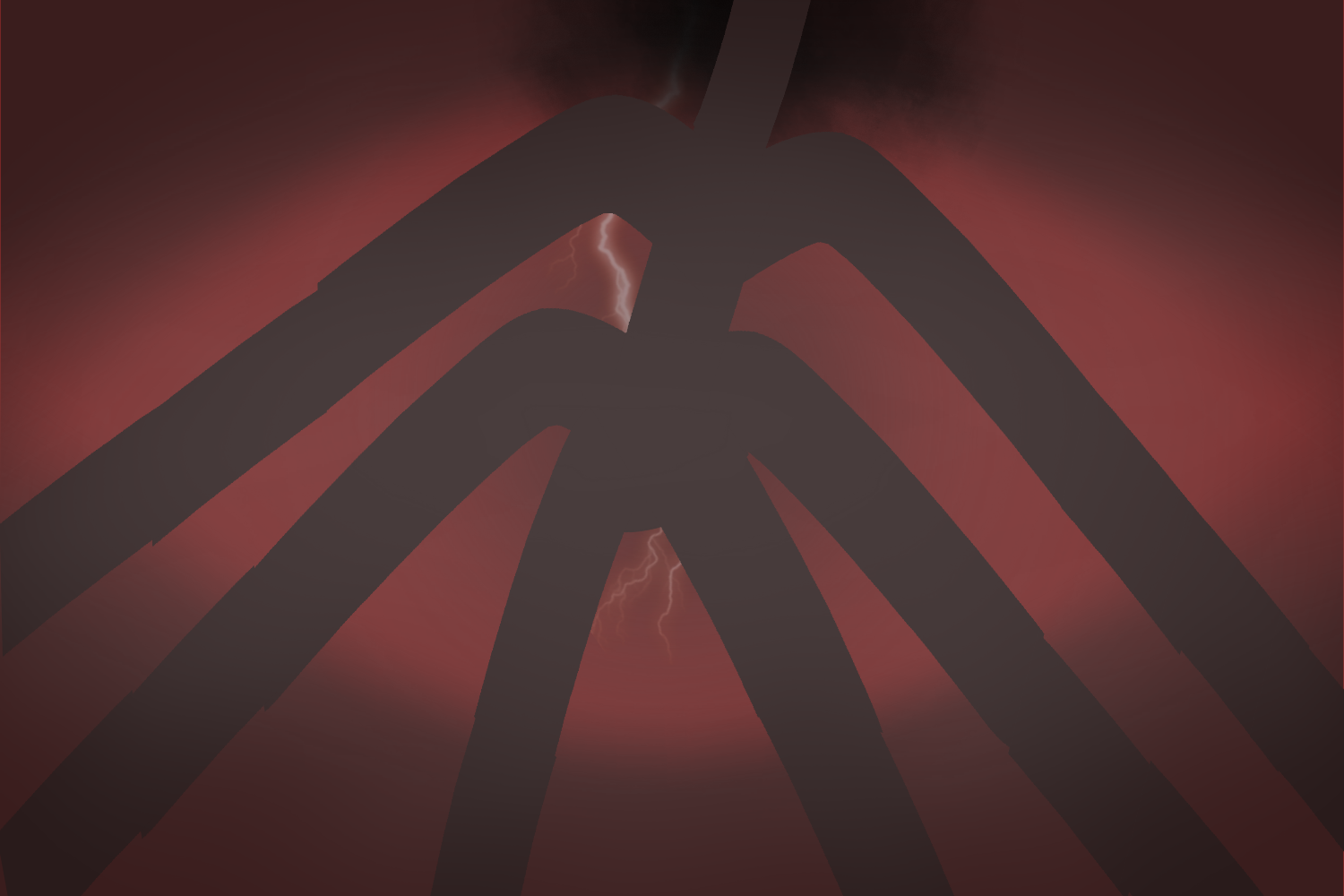
Season 5 sets feel interchangeable, synthetic, and lifeless. Compare Hawkins Lab in the first season or Starcourt Mall in the third season to the final season’s bold new Abyss, and you’ll find nothing more than a gilded expanse, stripped of the horrifying whimsy of the show’s earlier seasons. The revelation of the Abyss’s existence was a major plot point—and plot twist—of Season 5, but the new location can’t hold a candle to the Upside Down.
Bigger visuals failed to raise stakes; on the contrary, they diluted them. We might’ve been on the edges of our seats in the finale’s battle scene… but that’s only so we could grab a bite to eat. After five seasons of tension, it was disappointing that the party was able to defeat Vecna and the Mind Flayer in only eight minutes with minimal struggle. The battle’s sheer implausibility was maddening; how did our heroes topple villains who have haunted every Halloween since 2016 with a plan cooked up in roughly the time it takes to microwave an Eggo? Also, where were the demogorgons—or the demodogs—or any of the other foes the party has faced? If “Stranger Things 5” taught anyone anything, it’s that Marvel needs to scoop up the Duffer Brothers before DC does.
We can’t find an answer for how Netflix fumbled so severely with a seasonal budget larger than the GDP of Anguilla. Sure, a couple of hundred million dollars can’t necessarily fix bad writing—but after the first hundred million, the spectacle should’ve meant something. Season 5 mistook scale for substance and delivered lavish but hollow imagery.
If the cast of “Stranger Things” is star-studded, the show itself is the Big Bang. Most of the show’s actors and actresses did the best with what they had—and what they had wasn’t great.
Millie Bobby Brown portrayed Eleven as strongly as ever, but there wasn’t much for her character to do. The character as a whole felt underwhelming and sidelined throughout the season; it was almost jarring when she reclaimed her importance in the series finale. The ambiguous ending to Eleven’s story lessened the minimal impact her character had on the season.
Finn Wolfhard’s character, Mike Wheeler, just didn’t resonate this season. He served as little more than a bystander, and we weren’t particularly satisfied with his post-series fate. His on-screen chemistry with Eleven was regrettably stiff until the series finale. In a show that tried so hard to give its characters a good ending, Wheeler got the short end of the stick—and for no clear reason.
Dustin Henderson (Gaten Matarazzo) had an interesting arc with Steve, which was executed surprisingly well, but was in many ways eclipsed by the sheer number of characters and plotlines. Caleb McLaughlin performed well in his role as Lucas Sinclair, but it didn’t seem like he had anything to do the entire season. His coma-recovering girlfriend, Max Mayfield (Sadie Sink), found herself in a similar conundrum; her development was contingent on the actions of others.
Will Byers (Noah Schnapp) was given considerable attention this season. Schnapp’s acting was solid, but the writing was a disservice to Will’s character; his coming-out scene in particular was lauded by some and loathed by others. While Will’s coming-out was pivotal to the plot, having the character make this announcement in such a cinematic manner in front of a sea of people—some of whom he’d never had any real opportunity to interact with—was inauthentic. Placing such a highly theatrical moment in a setting where being openly gay could carry serious social risks makes the scene feel less like an authentic moment for Will’s character and more like a dramatic declaration that doesn’t adequately reflect the reality for most queer teens in that era.
Charlie Heaton and Natalia Dyer’s portrayals of Jonathan Byers and Nancy Wheeler were solid, but without definition. It was unclear where either of them was going. While their breakup was intended to allow both characters room for independent growth, the Duffers only demonstrated that growth in the epilogue through implied, off-screen development.
One thing’s clear: this season demonstrated that even the best actors and actresses can’t make something out of nothing.
“Stranger Things 5” is enjoyable—until you stop to think about basically anything that’s happened. It’s unfortunate that a beloved show of ten years bid its audience such a meager farewell, and it’s no surprise that fans convinced themselves that a secret ninth episode was coming to cope with their critical heartache. Don’t tell anyone, but we’re still holding on to some hope.
Final rating: 2/5
Your donation will support the student journalists of Davie High School. Your contribution will allow us to purchase equipment and cover our annual website hosting costs.