









Content Warning: This article includes detailed descriptions of eating disorder behaviors and pro-anorexia online communities. If you or someone you know is struggling with an eating disorder, help is available. Reach out to your doctor or a trusted adult. If you are struggling with a mental health crisis, call the suicide and crisis lifeline: 988.
When I was thirteen, I posted a photo of myself to Instagram. It wasn’t to my main account, but rather an account I created for the sake of documenting my anorexia. The photo was a side profile of my abdomen, with both my pelvic bones and my ribcage in full view. I was emaciated. The caption: “P.S. I know I’m a total whale, I promise I’m working on it :(”
The more bones I could count from the outside of my skin, the more fulfilled I felt. I read the replies with eagerness and smiled to myself at how well I was doing at starving myself. For the first time since I was a child, I was small again.
It was a year prior when I opened “eating disorder Twitter” for the first time. I was always an individual who was insecure about my weight. Very quickly, I was sucked into a rabbit hole of exposed collarbones, spines, and kneecaps. Photos tagged “hand checks,” “thigh checks,” “wrist checks.” I knew what an eating disorder was, but every girl my age and older talked casually about skipping meals. I didn’t believe I had anorexia. To me, as long as the number on the scale stayed three digits, I didn’t actually have an eating disorder.
I was wrong.
Documenting my eating disorder online became an intoxicating hobby. It was an incredible secret that only I knew. I’d retreat to my room as often as possible to consume more content that featured women whose skin looked vacuum-sealed to their bones. It became all I was interested in.
I still remember the whirlwind of advice. You need to download the apps. A step tracker, a fast tracker, a calorie tracker, and every other app you could possibly need to disappear. You need inspiration. Fatspo, thinspo, chubspo, averagespo, comparisonspo. You need to post photos of your body and apologize in the caption for your stupid, fat legs. Eat the food your parents made for you with guilt. Provoke the back of your throat with your index finger over the toilet bowl.
I knew it wasn’t just me whose life had been taken over. But I had never interacted with anyone who felt the way I did face-to-face. It was only recently that I finally spoke with another Davie High student who was coping and recovering from her own anorexia. The student’s diagnosis came shortly before her sophomore year of high school and turned her life upside down. Her world quickly turned into a whirlwind of prepacked lunches and teams of doctors. Every moment of her day was suddenly consumed by eating and not eating. She felt she could no longer be honest with the people around her, even her parents.
“The manipulative and sneaky nature of eating disorders definitely kept me from being honest with them about what I was eating and whatnot,” she said. “It’s a whole different part of you that will do anything to relieve the thoughts in your head.”
Hunger isn’t something that aches—it scratches. A constant reminder whenever you are in the vicinity of something even remotely edible. Even food you don’t like becomes the most desirable forbidden fruit. For all the anecdotes I read from other anorexics online, nobody ever talked about how much it hurts. It’s a pain you can feel in your arms, your legs, and even your hands.
“I had to quit sports that I had done for 10 years,” the student said. “Nobody truly understands how hard of a mental illness that eating disorders are and how hard they are to treat. It was probably the worst time of my life.”
It has been several years since I’ve had a fasting app on my phone. Pro-anorexia content makes its way to my algorithm every once in a while, but it no longer interests me. I’m not twelve years old and sick anymore. But I still see comments on young girls’ posts pointing out all the things that tell them the creator is anorexic.
“Hair reflects health,” on a video of a high school girl showing off her outfit.
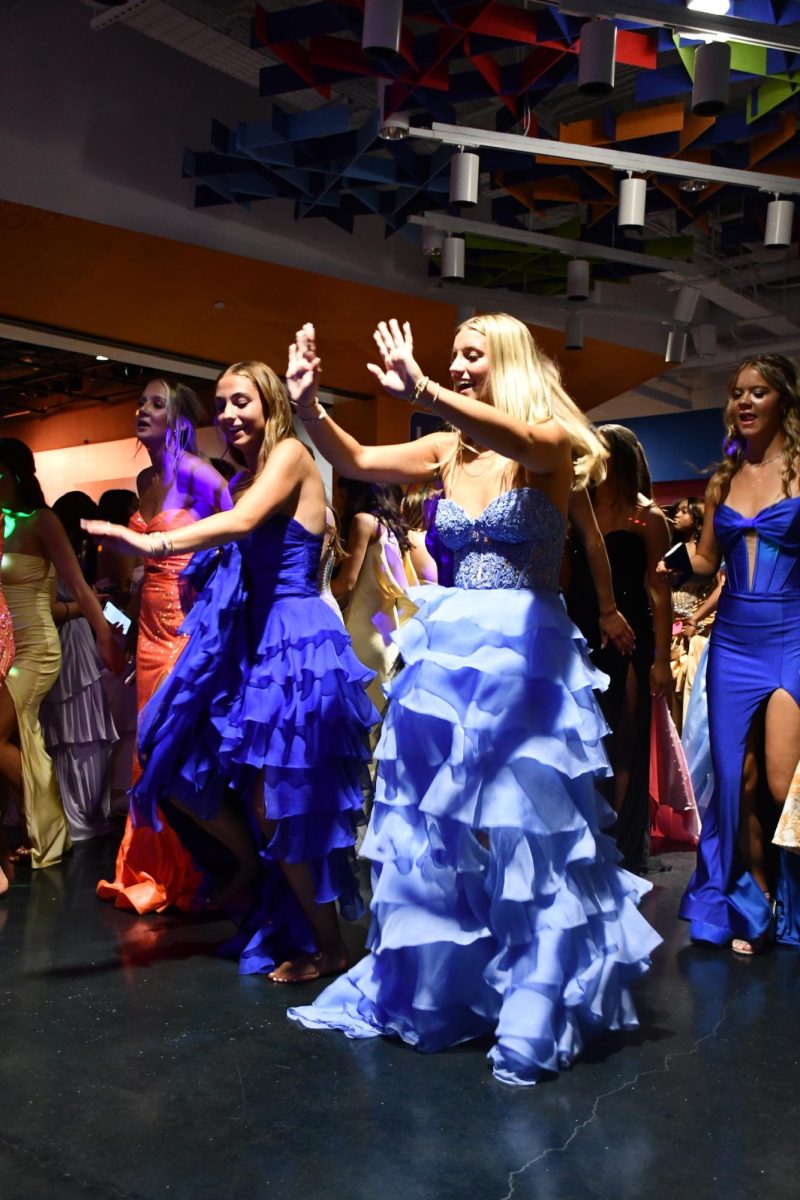
“I know what this is callED” on a prom post.
“The weight loss makes her look 20 years older.” On a post about Ariana Grande’s body.
What I can guarantee about almost each and every single one of these girls who struggle with disordered eating is that they know. There isn’t a day that goes by for someone with anorexia that doesn’t consist of constant scrutiny of one’s appearance. Of course, they know. They know because they’re posting photos of their naked ribcages on Twitter for validation and accountability.
“It took my parents a long time to understand that this is much more serious than they thought it was,” the girl said. “And that was with teams of doctors telling them what they had to do and how they had to act and what they had to say. The whole process just made me realize that people don’t think an eating disorder is as bad as it is.”
An estimated one in five women experiences an eating disorder by the age of 40. Disordered eating behaviors are vast, ranging from purging to laxative abuse. If these behaviors have become so common, why do adolescents fail to take them seriously?
“A lot of the time, my friends didn’t say anything,” the girl said. “I wasn’t necessarily treated any different, but I probably should have been treated a little bit different, because I needed help, and the people around me just didn’t recognize that.”
It can be confusing where the lack of empathy for people with eating disorders comes from. Anorexia nervosa was named in recent years to be the deadliest psychiatric diagnosis due to its attack on every part of the body. From your teeth, to your hair, to your liver, to your kidneys: it is the longest form of ending one’s own life, a truth that became all too clear to the student.
“I had to tell somebody or it was going to take me,” the girl said, “because there was just no way I could live like that anymore.”
Because eating disorders are inherently competitive in nature, pointing out the visible unhealthiness of the person struggling can act as a force of encouragement. The idea of looking sick, to many people struggling with anorexia, is the greatest compliment.
“It was just a constant battle in my brain,” the girl said. “There were two sides to me. One wanted to recover, and the other was just ‘No, I’m not doing this. I want to get worse. I want to lose more weight. I want to disobey and manipulate and lie.’”
When all your energy is devoted to controlling a number on a scale, getting your face laughed in can shove you further into the pit of self-loathing. It is as though the only small part about you is what you have suffered.
“Compassion comes before criticism because no one heals through shame,” the student said. “Every person who is struggling deserves empathy and the chance to be seen as more than just their disorder.”