
























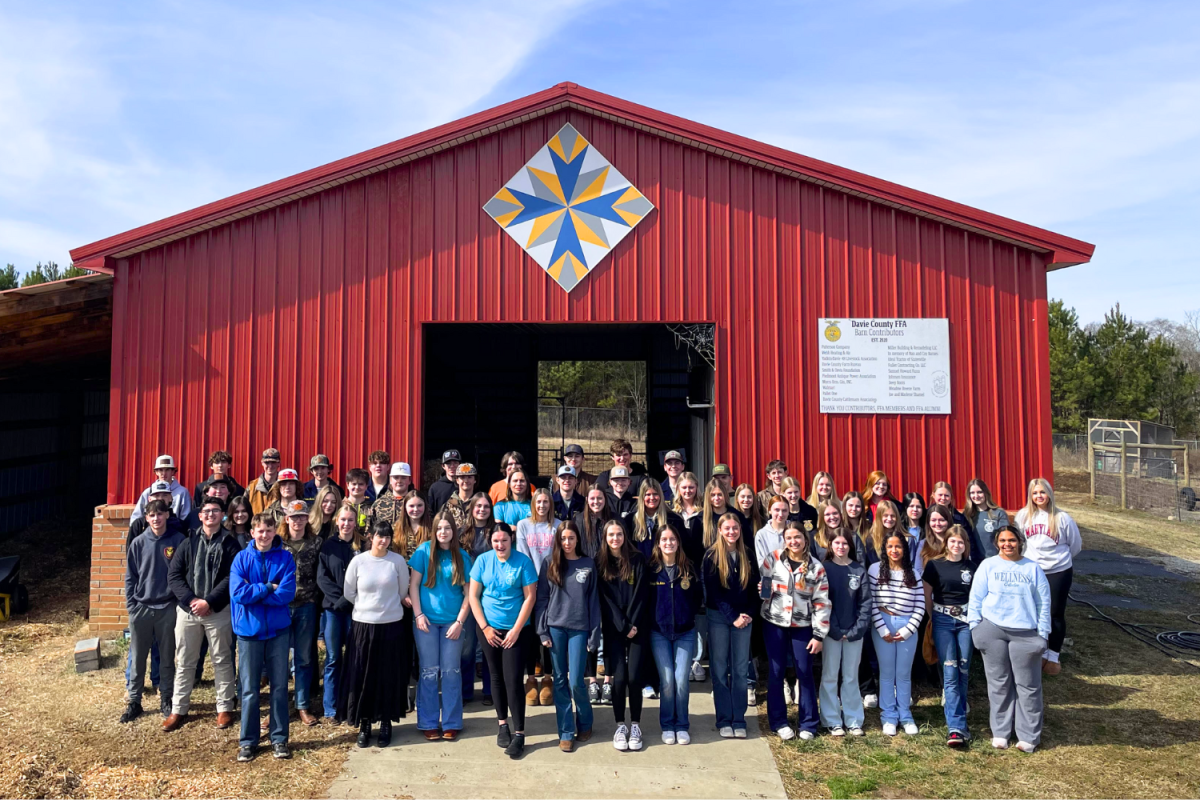
Behind the doors of Davie High’s CTE building lies its very own Future Farmers of America (FFA) program. Members proudly wear their blue jackets, adorned with pins that reflect their dedication and achievements. Though they clean up nicely, their journey is far from polished—it’s one of dirt-stained jeans and scuffed boots. From refined speeches and barn-scented days, Davie FFA members prove that achievement is not earned through social presence, but it comes from the effort put in behind closed doors. It is this dedication and commitment that runs deep in the heart of Davie FFA that makes such a chapter stand out.
Long before FFA became a defining part of Davie County’s agricultural story, with members leaving their mark in classrooms, competitions, and communities, a group of agricultural teachers planted the seeds for what would become a nationwide legacy. One hundred years ago, in 1925, four agricultural educators at Virginia Tech came together to build the Future Farmers of Virginia (FFV) for boys studying agriculture. Two years later, H.O. Sargent and G.W. Owens wrote the first constitution and bylaws for the New Farmers of Virginia (NFV), an organization established for African American students studying agriculture.
On November 20, 1928, Future Farmers of America was established in Kansas City, Missouri. The First National Convention was held in Kansas City, where 33 delegates from 18 states gathered, creating a moment that would become a staple in the history of FFA.
Blue Jackets, Gold Standards
National blue and corn gold were adopted as FFA’s signature colors in 1929. In 1933, when FFA advisor Gus Linter saw a blue corduroy jacket in a hardware store, he had his chapter’s name stitched on the back in gold. This idea became so popular that 92 years later, FFA members wear their blue corduroy with pride as part of their official attire.
Learning to Do, Doing to Learn
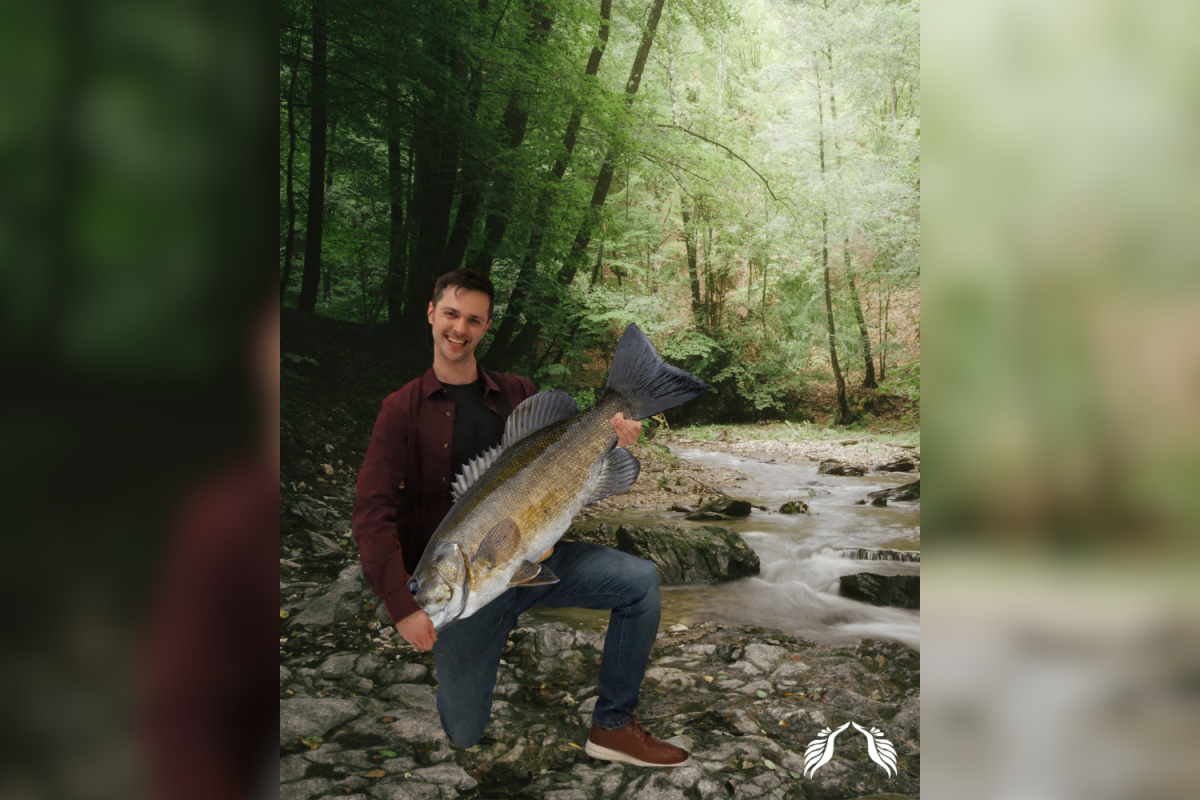
Davie County FFA competes in the Northwestern Piedmont Regional Rally each year. Students from Davie County High School’s FFA chapter enjoy competing in various Career Development Events (CDEs) and Leadership Development Events (LDEs), such as tool identification, plant identification, meat identification, forestry, floriculture, and public speaking. Aside from the Regional Rally, Davie County FFA participates in a multitude of events throughout the year. This includes livestock shows, the Regional Leadership Conference, State Convention, and educational field trips. Davie County FFA President Matthew Ramsey’s favorite educational field trip each year is the release of the trout that advisor Eli Lindsey raises each year.
Lindsey explains the benefits of agricultural education in high school, saying, “As you guys are learning and doing these CDEs and LDEs, competitions, and SAE [Supervised Agricultural Experience] projects, it’s giving you opportunities to better your career opportunities, setting you up for career success.”
How is Davie Different?
While every FFA member pursues excellence, Davie County FFA stands out from the crowd as they represent themselves and their community. Advisor Lindsey describes how he hears Davie County FFA being mentioned at events as knowledgeable and curious to learn about what they study. “The thing I appreciate is that all of our members are respectful when we go somewhere.”
Similarly, Carter Stroud, Davie County FFA Junior Sentinel, has noticed that Davie “takes practice a lot more seriously.”
“We put more dedication into our competitions,” Stroud says. “Other schools might do more than us, but we do better at the competitions that we do.”
Lillian Ragan, Davie County and Northwest Region FFA Reporter, echoes this sentiment. “Even if we don’t know that we’re good at something, or we don’t like something, or we don’t necessarily think we’re gonna succeed, we still do it and we still put ourselves out there… and I think that that makes a huge difference.”
FFA members work year-round towards their competitions, SAE projects, and career development. These endeavors require invaluable problem-solving skills that FFA members gain through their involvement in the club. Sophomore Emily Hernandez describes the mindset of FFA members as “more hands-on, compared to academically thinking students. They find the root of a problem.”
Earning to Live, Living to Serve
Davie County FFA provides numerous opportunities for students to make a positive impact in their community. Junior Emma Bishop mentions opportunities varying from fundraising sales that the chapter holds to the workdays at the Storehouse for Jesus, a Christian non-profit organization whose mission is to help those in need.
Students around Davie High have also noticed the difference FFA is making with the can buckets found in classrooms. Davie County FFA collects over 580 pounds of recycled cans to help contribute towards NTHS dues.
Future Farmers
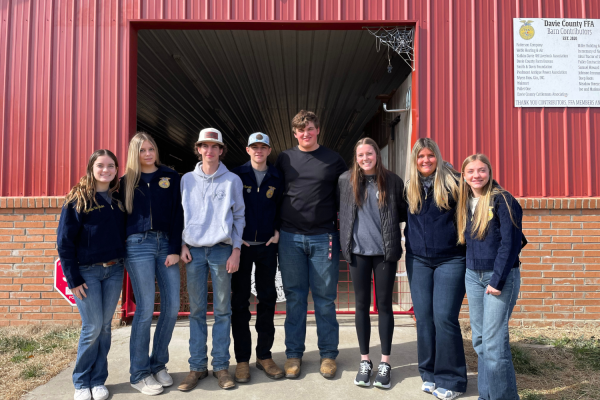
FFA advisor Lindsey talks about the importance of agricultural education and leadership development.
“Agriculture is our number one industry in North Carolina,” Lindsey says. “Everything we eat, the clothes we wear, the pencils we write with, everything we use revolves around agriculture.”
But does someone have to be a farmer to be involved in agriculture? The answer is no. In fact, Lindsey describes the large number of students he teaches who have little to no background in agriculture. The FFA mission is to promote premier leadership, personal growth, and career success through agricultural education. Agricultural education and careers vary from veterinary sciences to mechanical engineering and even business leadership.
Many students have described a welcoming, familial atmosphere at Davie’s FFA chapter. Freshman Reese Harris says, “I think it’s very cool how there are people who are really quiet, and then they’ll be a leader in FFA.”
Leah Webber added onto that sentiment, saying, “FFA stands out from other clubs because there are so many people in the FFA that you wouldn’t think would be there.”
It is this “tight-knit community,” as Lindsey describes it, that draws students with such diverse interests and backgrounds to FFA and the CTE (Career & Technical Education) classes at Davie High.
Five Paragraphs and a Thousand Lessons
The FFA Creed was written in 1928 by Erwin Milton Tiffany. The creed was officially adopted by the FFA in 1930. The creed is E.M. Tiffany’s expression of his belief in agriculture and the integrity of America.
FFA members in seventh, eighth, or ninth grade can compete in the FFA Creed Speaking competition, starting at regionals and funneling their way up to state and national competitions.
Davie County’s 2026 creed speaker, Madeline Leonard, says, “My favorite line of the creed is ‘I can exert an influence in my home and community’ because I’ve been working on that with myself, and I think it’s important.”
Davie FFA’s Junior Vice President Emma Bishop says that her favorite line of the creed is “I believe in the future of agriculture with a faith born not of words but of deeds.” This is E.M. Tiffany’s way of saying that actions speak louder than words, and FFA members strive to show their intentions through their actions.
Behind Blue Jackets
The work of each member of FFA is unique, but there is one thing that any member can agree on: an advisor is the powerhouse of a chapter. Davie County FFA’s clockwork heart is run by advisors Jesse Ledbetter and Eli Lindsey. Lillian Ragan proves the impact of her advisors, saying, “Even if I didn’t want to do something… like I did not want to run for regional office… Mr. Lindsey and Mr. Ledbetter have always pushed me to do it.” She went on to explain her gratitude for the experiences she would’ve lacked without a word from her advisors.
An FFA member may grow out of their jacket, but they will never outgrow the lessons stitched into it. As competitions, community service projects, and classroom memories become threads in Davie FFA’s history, woven with leadership, growth, and success, a new generation slips into their corduroy and carries on a legacy that lives far beyond the blue jacket.