As Women’s History Month comes to a close, it is important to recognize all of the magnificent achievements women have made over the years. The acts of women’s self-sacrifice have had an incredible impact on our society today, yet are still overlooked and forgotten, even when their stories have been told.
The most popular accomplishments of women often include the same few stories circulated only in March, and while they are nothing short of monumental, it is vital to shine a light on the women, no matter their degree of greatness, who have helped us get to where we are today. North Carolina women have collected many stories of their own to share, ones that often get lost in untouched library books and glossed-over Google pages. In an attempt to bring a few of them to light, the following is a list of great women whose activism began on North Carolina soil.
Women of North Carolina
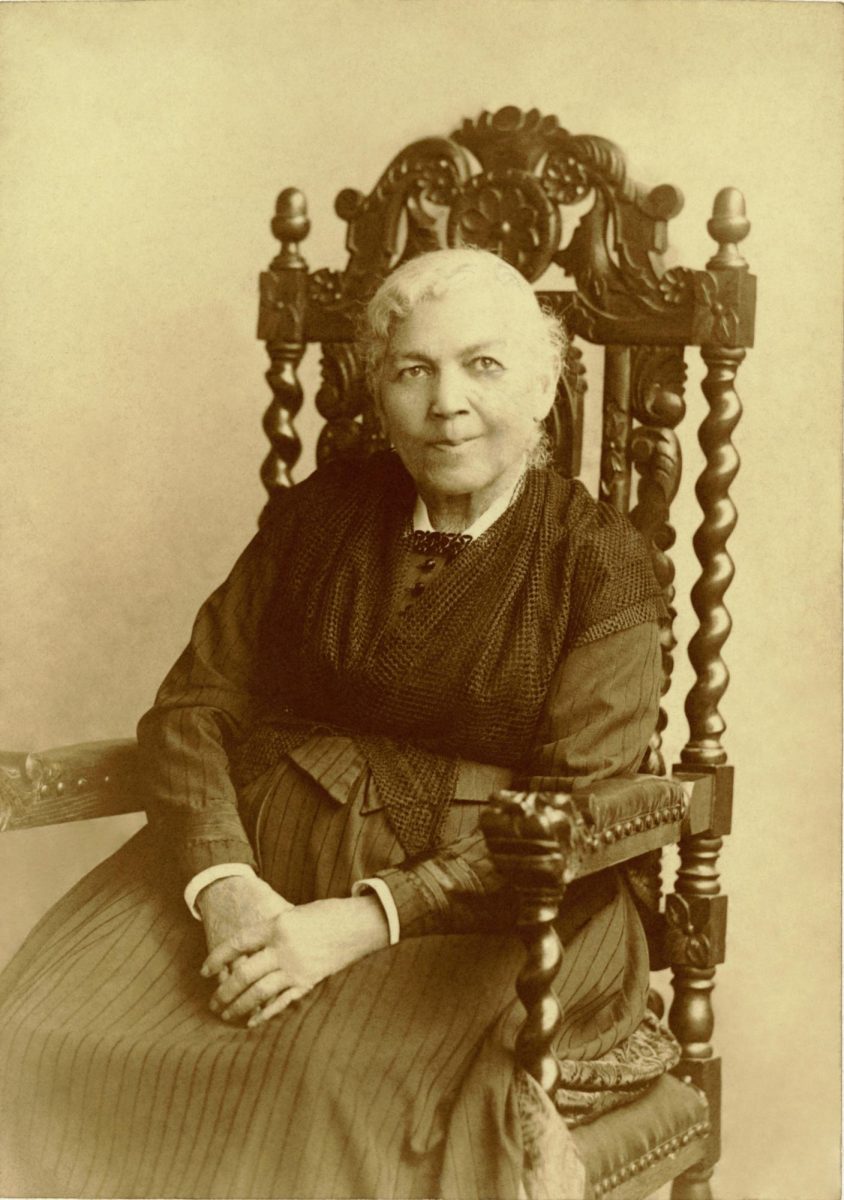
The only known formal portrait of Harriet Jacobs. | Gilbert Studios, Washington, D.C. (C. M. Gilbert); Work is in the public domain.
Harriet Ann Jacobs, 1813–1897
Despite being born into slavery in Edenton, North Carolina, Harriet Jacobs became an incredibly successful writer and abolitionist. Learning to read and write while under the bounds of slavery, Jacobs began her writing career in 1853 with anonymous letters to the New York Tribune, where she lived after escaping slavery in 1842. What made Jacobs stand out, even today, was her transparency on the subject of the sexual abuse that slave women would often undergo. After being convinced by friends, Jacobs published what she is most recognized for today. Her autobiography, “ Incidents in the Life of a Slave Girl ,” was published in 1860, becoming a praised piece of writing in the US and UK. Knowing it often went ignored by abolitionists in the North, Jacobs made a point to depict the sexual horrors that came from southern slave owners, recounting her own nightmares from her childhood in slavery. Her writing then went overlooked for decades during the US Civil War, but resurfaced in the 1960s and 70s during the civil rights movement. Jacobs spent her life devoted to telling what no one dared to say aloud, which took a great amount of courage that continues to inspire many today.
Edenton Tea Party Signers, October 25, 1774
Right before the American Revolution, a group of 51 women looked at the events unfolding in Massachusetts and decided to speak out. The women got together and drafted a resolution called the Edenton Tea Party Resolves , which stated they would boycott all imported British goods until the British Parliament repealed the Intolerable Acts. Knowing this could have consequences, the women made the brave choice to sign their names on the paper, ensuring that everyone knew who was involved. This event, known as the Edenton Tea Party, is one of the earliest known acts of political activism done by colonial American women.
Application for a Widow’s Pension from Margaret Strozier, 1 February 1842 | Document archived by MosaicNC
Margaret Strozier, 1740–1842
Margaret “Peggy” Strozier , a mother to seven children in Rowan County, was acting alone to care for her household while her husband was off fighting in the American Revolution. During the war, her husband and his unit camped near Strozier’s home. Graciously, though already caring for her own children, Strozier decided to travel to the unit’s campground and prepare food for them in their perilous situation. Her compassion for others and will for her family did not end there, as in the early 1780s, the Strozier farm was attacked and destroyed by a group of Loyalists, leaving the family with nowhere to stay. With another courageous decision, Strozier carried her children through South Carolina, where she met her husband and the Patriot Army in safety. She recounted that experience as “half-begging and starving,” highlighting the strength of this woman who did everything she could to protect her family, as well as the Patriot Army, in times of need.
Anna Julia Cooper is seated with a book in her lap. | C. M. Bell , Public domain, via Wikimedia Commons
Anna Julia Cooper, 1858–1964
Though she was born into slavery in Raleigh, Anna Julia Cooper , freed in 1863 due to the Emancipation Proclamation , went on to become a highly educated woman. Earning a B.A, M.A, and becoming the fourth African American woman to obtain a PhD. Throughout her educational pursuits, she was a devoted activist for the education of women, as she constantly faced patriarchal oppression. In 1892, Cooper published her most famous work, “A Voice from the South,” after the creation of Jim Crow laws . With this, she spoke about the still prevalent racist views and the innovation of African Americans and criticized Black men for their sexist views towards Black women. Cooper is still known and admired today as an advocate for African American women, and her work was heavily looked upon during Black feminist movements in the 20th century.
Mary Jane Patterson, 1840–1894
Born into slavery in Raleigh, Mary Jane Patterson is known for her academic achievement in the “Hall of Firsts.” Patterson holds the distinction of being the first African American woman to earn a bachelor's degree. Obtained from Oberlin College, she graduated in 1862 after completing a four-year “gentleman’s course,” opposed to the two-year women's program. Though she moved around some after graduation, Patterson ended up in Washington, D.C., where she taught at the first U.S public high school for African Americans. She later became the principal of the school, taking a one-year gap in this position while the first African American Harvard graduate acted in her place. On top of this career, and as a proud advocate in the feminist movement, Patterson helped found the Colored Women’s League of Washington , D.C., which prioritized their community's standards and conditions for women of color. Patterson helped pave the way for African American women to receive an education and inspired women of color everywhere.
Dr. Annie Louise Wilkerson, 1914–2005
Born in Apex, North Carolina, Dr. Annie Louise Wilkerson became the first woman in the state to specialize in gynecology, delivering over 8,000 babies in her career. While earning her medical degree, Wilkerson was one of four women in her 72-person class at the Medical College of Virginia, determined to see it all the way through. Her first ever delivery was during her freshman year of medical school in 1940, and she stuck with it ever since. Wilkerson proudly boasts her 8,000+ deliveries after dedicating her life to helping women in both easy and life-threatening births, saving families, and helping the unfortunate. With a deep care for her patients and her career, Wilkerson has stated that, “[Medicine] is not a business. It is an art…Money didn’t make a difference.” Wilkerson made history with her medical care, helping thousands of women and thousands of babies, holding a place as an upstanding woman of medicine.
Remember, these are only a fraction of the stories that our women have to tell. Over the two and a half centuries of women struggling in this state, courageous stories and inspirational deeds have emerged. Ones that deserve to be shared and properly heard. We must acknowledge the sacrifices and hardships that women have gone through to get us to this point in time. A time where you may be sitting in pants, with school assignments due, reading this article about this very month—something women one hundred years ago could only dream of.