


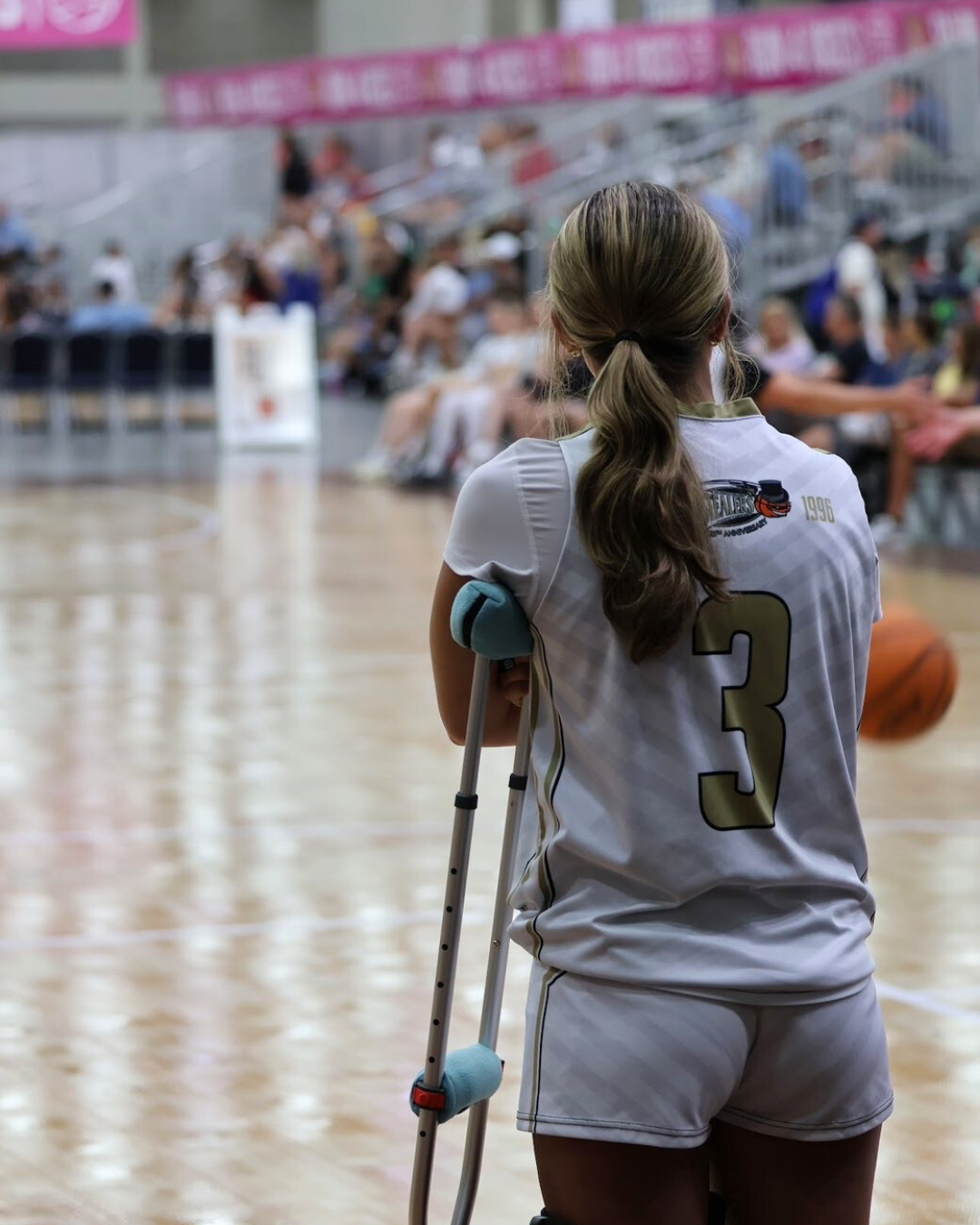
Receiving the pass, Bailey Aderhold aggressively dribbles against her defender and up to the three-point line. She retreats the dribble to guard the ball from her opponent… and POP. Aderhold’s knee hyperextends, caves in, and she is on the floor in an instant. Years of dedication, hard work, training, grit, and effort are all lost in an erratic moment. With a simple, sudden maneuver, her entire sports career is put on pause, regardless of her age and accomplishments.
Nestled underneath the kneecap and other connective tissue lies the anterior cruciate ligament, better known as the ACL. This ligament is one of many that help connect the thigh bone (femur) to the shin bones (fibula and tibia), providing stability and preventing excessive movement of the knee. The tearing of an ACL is caused by many factors, most of which occur in sporting events among fierce athletes.
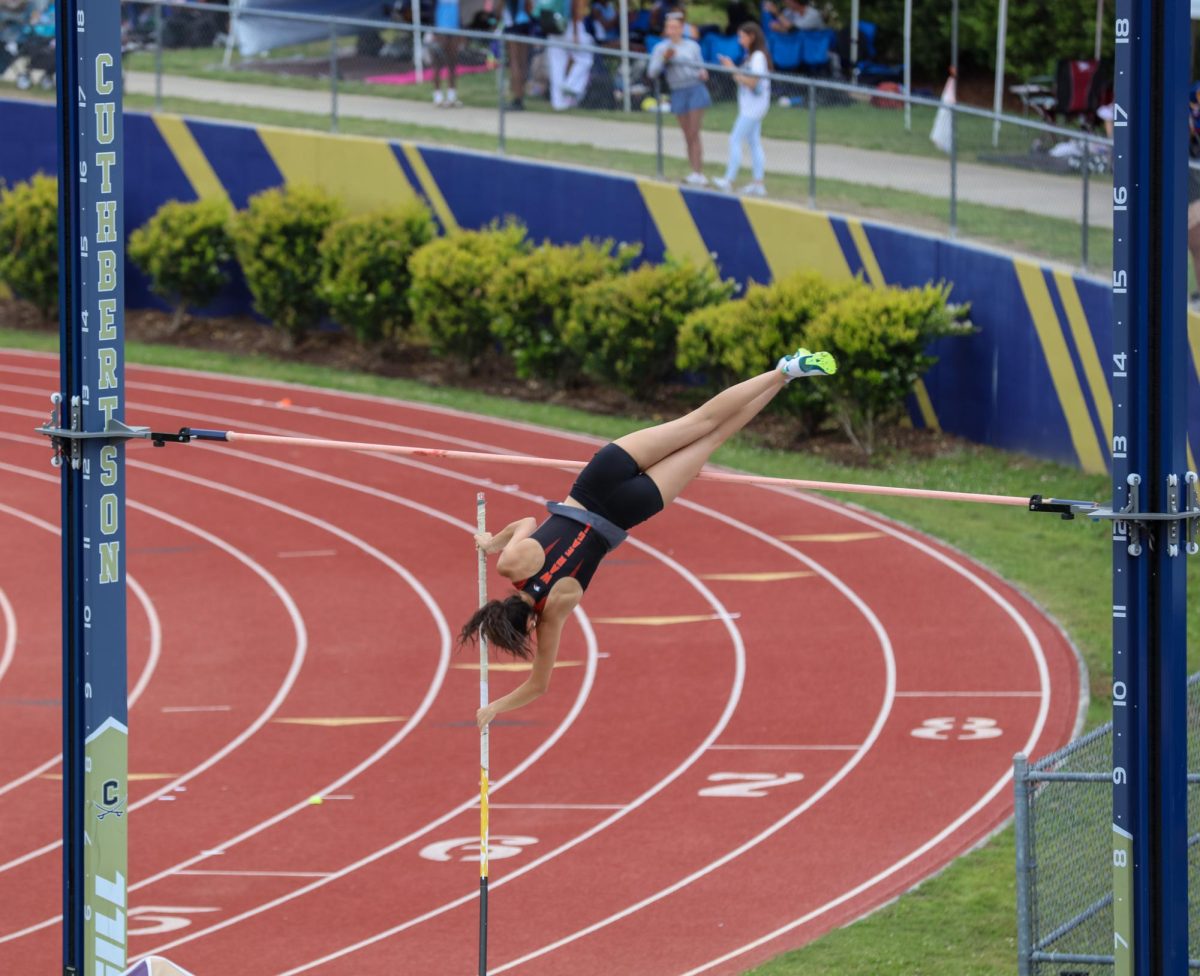
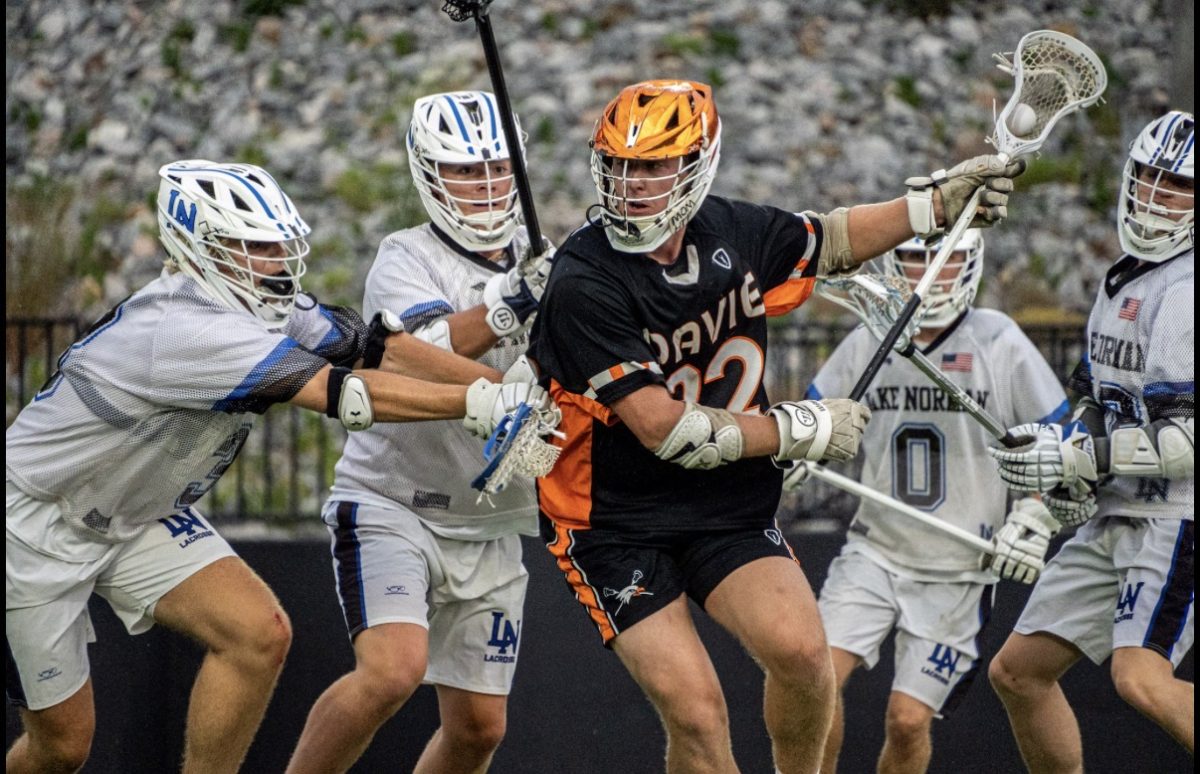
And among those athletes, ACL tears can be an immense setback. The injury has become increasingly common, impacting roughly 1 in 3,500 people annually, and high school students are particularly vulnerable, especially those who play sports requiring quick pivots and jumps. Unsurprisingly, Aderhold is far from the only athlete to have experienced this kind of heartbreak. Junior Jonathan Hanes, a two-sport athlete in basketball and track, and sophomore Gracyn Coleman, who plays both soccer and basketball, have similarly suffered this painstaking downfall.
For all three, the sound of that pop marked the start of a grueling journey through surgery, physical therapy, and recovery. For these athletes who have faced this struggle head-on, the whole tragedy begins with one step—literally.
Gut Feeling
A common refrain from athletes suffering an ACL tear is the immediate realization that everything has changed. Athletic trainer Anthony Lang says that, in his experience, athletes often have a “gut feeling that something happened.”
“The big thing is trying to keep them calm and remind them that until it’s proven with MRI, you don’t know the significance of it and what’s going on,” Lang says. “So that’s the big part of the initial fear of it is just kind of keeping them calm and trying the best you can to not overreact to that significance of an injury.”
For junior Jonathan Hanes, that moment came on July 20, 2024, while simply playing basketball on a cruise.
“You just know what happened,” he said. “And you just gotta wait for the results to confirm it.”
He has now been cleared for three to four months, but still remembers his catastrophic event vividly.
Gracyn Coleman felt that same shock just 30 minutes into a soccer game against West Forsyth. “I felt defeated, and I definitely knew something had happened,” Coleman said. “I just felt like all my hard work had gone to waste.” Coleman hopes to be recovered by March of 2026, when she will finally be able to return to her club soccer team.
Aderhold, a current senior who tore her ACL earlier this year, also shares her thoughts about the immediate impact of her injury.
“My first thought was that basketball and tennis, the two things I love most, were about to be taken from me for a long time,” she said. She also mentions how extremely heartbreaking it was to know that, although she is planning to play basketball in college, her tennis career was stolen from her. She was ultimately unable to return to the sport in time for what would have been her senior season.
Reaching Redemption
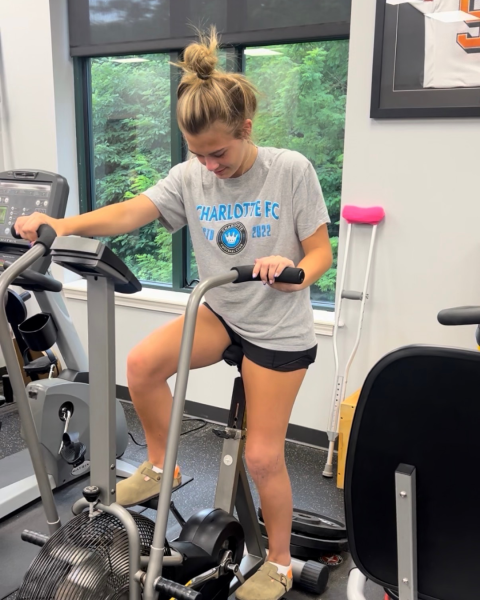
Although all three athletes were discouraged after their injury, they all have another trait in common: determination. While Hanes has already been cleared and recovered, he has gone through the same experience as Aderhold and Coleman.
After a two-and-a-half-hour surgery, it takes around 10 months for someone with a torn ACL to finally be able to return to athletics. The monotonous six to nine months of physical therapy consist of weekly appointments with the physical trainer. These appointments revolve around strengthening the muscles, stretching the ligaments, and building back strength in the knees. Throughout physical therapy, the three athletes have learned how to persevere and slowly build back what they once had.
For Hanes, one trait he adopted during his recovery was recording his progress. In doing so, he was able to have a clear record of how he had improved, which helped him keep perspective and remain patient throughout the process.
“So, I would look back, like, a month ago, and I couldn’t walk, but now I could walk, and then after, like, three months after my surgery, I look back to when I, like, could barely walk. Now I can run,” Hanes said.
For athletes like Aderhold, whose recovery has been a much greater struggle than initially anticipated, the experience has opened up new opportunities. Since her injury, she has taken on a coach-like role with younger athletes, especially as a senior.
“Being in this role has given me a new perspective on the game and helped me see the effort, dedication, and teamwork it takes to succeed,” Aderhold said. “In the future, I know these lessons will help me handle obstacles in sports, school, and life with a stronger mindset, a deeper understanding of perseverance, and a reliance on my faith.”
For any athletes who will one day find themselves in these same shoes, Coleman offers advice that has helped her on the road to recovery.
“You’re gonna have some good days in physical therapy. You’re gonna have some bad days. You’re going to be hurting, and then you’re going to feel like you’re fine. You just got to get through it and know that there’s going to be a lot of progress, even if it doesn’t seem like it. You’re going to be coming further within your recovery each day.”
Although ACL tears are a tragic setback for an athlete’s career, the determination to recover and come back empowers student-athletes’ sports journeys tremendously. After months of perseverance, progress, and rehabilitation, the final return of an athlete to their sport is an impactful ending to a story that was never quite finished.




Kevin Cleary • Nov 14, 2025 at 11:21 pm
Great article on some hard working student/athletes!!